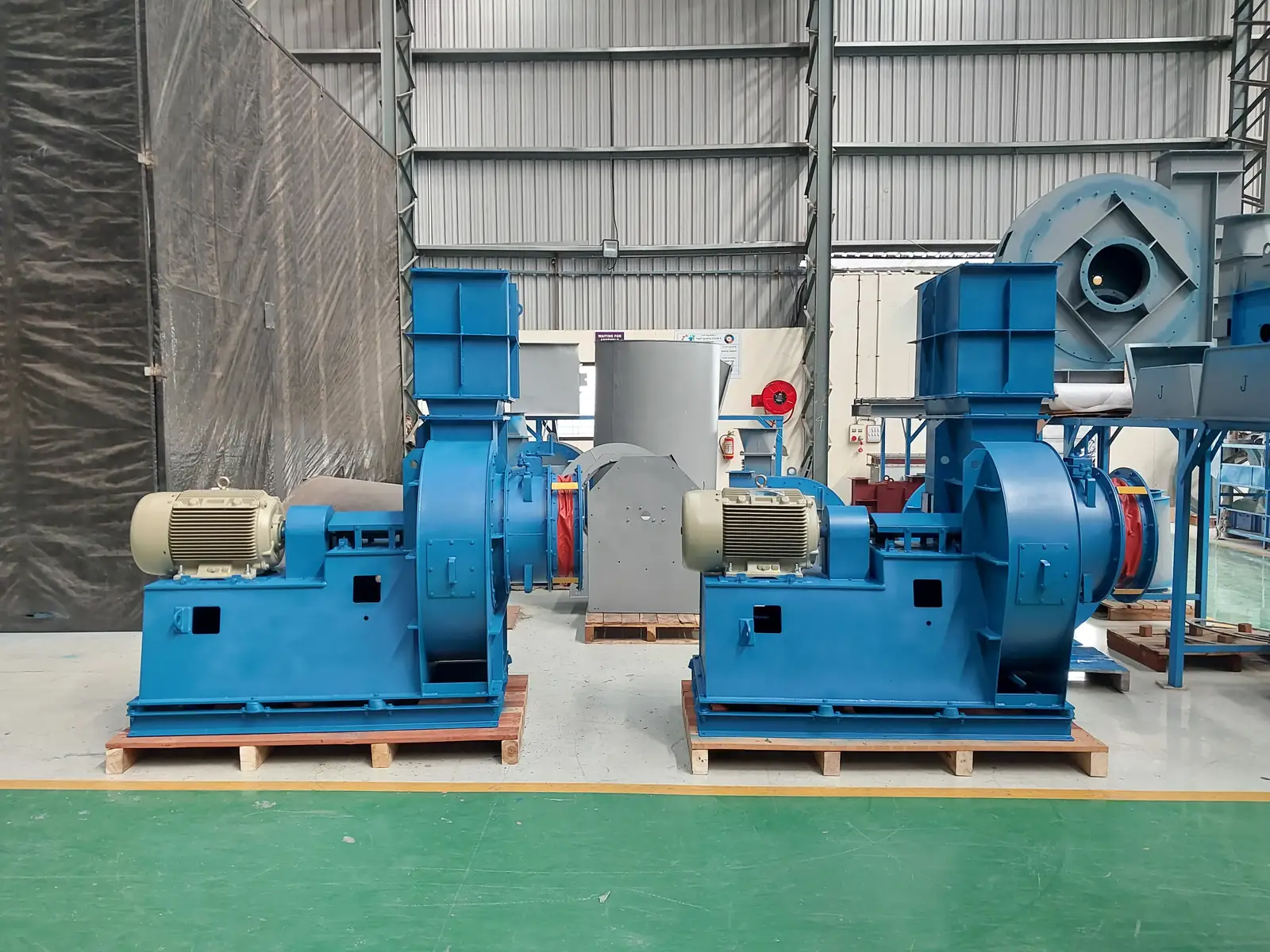
Picture the worst moment for a noise to show up: a drying-systems OEM has just commissioned a brand-new dryer at its customer's plant, with everyone standing around the machine on acceptance day. Two process fans move the air through that dryer — a 75 HP, ~750 mmWC, VFD-driven high-pressure fan and its sister. The fans can't quietly come offline for a week of investigation; the whole new plant is waiting on them. We'll call the OEM the Builder.
Within days of start-up, both bearings on one fan began making a loud, unusual noise. The site did the sensible first thing — topped up the grease — and the noise stayed. Then, two weeks later, the second fan did exactly the same thing. Grease again; noise again. Now it wasn't one odd bearing, it was a pattern on a new plant, with the end customer asking for the bearings to be replaced "at the earliest." A noise nobody can explain, on equipment nobody can switch off, in front of the customer — that's the problem the Builder brought to us.
Start with what wasn't wrong. Before this dryer ever shipped, both fans were performance-tested in-house on our 200 HP VFD test rig, to the IS 4894 / AMCA 210 method — each met its duty, with the test reports and curves on file. On site, when our engineer pulled the removed bearings and checked them, they came out not rusty — no lubrication or contamination story, and no "bad batch of bearings" story either. The fan was on-spec; the bearing was sound. What was left was how the bearing had been fitted — specifically, its internal running clearance. This was a commissioning/assembly setting, not a manufacturing or design defect in the fan.
The educational root cause (generic 5-Why):
Our engineer had already stopped the immediate pain — bearings replaced on both fans on site, run up, and the noise was gone, trial run satisfactory. But the durable fix for the cause isn't a better bearing; it's correct internal clearance, set and verified at assembly. We set the clearance right, and the fans ran clean.
Because the fans were rig-tested to their duty before dispatch, when a later airflow question came up we could hand over the same test report and curves and show the fan met its specification.
Honest note: this case is reported on what was measured — the fix was verified by an on-site trial run and formal closure. We don't publish vibration or temperature deltas we didn't record.
A fan that turns noisy right after commissioning — and shrugs off fresh grease — is usually telling you about how it was fitted, not whether the fan is any good. Here the fan tested on-spec and the bearing was sound; the answer was in the running clearance set at assembly. The value isn't only replacing the part; it's proving what's actually fine, finding the real cause, and closing it so the next fan doesn't do the same thing.
Running a fan that went noisy soon after start-up, and a grease top-up didn't fix it? Send us the details for a root-cause investigation — you'll get a written corrective action, not just another bearing.
— Jitamitra Electro Engineering · Technical Services
Engineered for Every Application.
Not on this job. When our engineer pulled the removed bearings and checked them they came out not rusty — no lubrication or contamination story, and no bad-batch-of-bearings story either. The bearing was sound. What was wrong was how it had been fitted.
The bearing's internal running clearance. That is a commissioning and assembly setting, not a manufacturing or design defect in the fan.
Because grease was not the problem. The site did the sensible first thing and topped up the grease, and the noise stayed. Two weeks later the second fan did exactly the same thing — greased again, noise again. That is when it stopped being one odd bearing and became a pattern.
Both were performance-tested in-house on our 200 HP VFD test rig to the IS 4894 / AMCA 210 method before they shipped, each meeting its duty, with the test reports and curves on file. When a later airflow question came up, we handed over the same report and curves.
The durable fix is not a better bearing, it is correct internal clearance set and verified at assembly. It is now feeler-gauge-checked on every fan.
Flow, static, gas temperature, application — or attach a spec, GA drawing or a multi-fan schedule. Engineer to engineer.
ISO 9001:2015 quality system · performance-tested to IS 4894 / ISO 5801 / AMCA 210 method · witnessed FAT on request.
*For our standard range. ATEX and special projects need 5 to 7 working days.
This site sets no cookies of its own. Google Analytics loads only if you accept. It sets two cookies, so we can see which fan topics people actually read. Decline and no analytics loads — the site works exactly the same. What we collect →