Dampers, guide vanes, silencers, wear protection, monitoring and more — the add-ons that make a fan fit your duty, your gas and your plant. Specified with the fan and integrated on our own floor.
The fan-side accessories are the parts that make a fan fit your duct, your gas and your plant: isolation and control dampers, inlet guide vanes, inlet and outlet silencers, flexible connections and expansion joints, wear liners, acoustic enclosures, vibration isolators, guards, drains and monitoring. Jitamitra specifies them with the fan and integrates them on our own floor, so the flanges, the materials and the pressure drop are the ones the fan was sized against.
A fan damper — also called a blower damper — is a moveable plate or set of blades fitted in the fan’s inlet or outlet to control how much air passes. An outlet damper throttles the discharge; an inlet damper or inlet guide vane (IGV) pre-swirls the air entering the wheel and does the same job for less power. A VFD instead slows the fan itself, and on the fan laws power falls with the cube of speed — so a damper is the cheaper capital choice and the more expensive running one. Which to specify, and when →
Every one is engineered to the fan we build for you and integrated on our floor. Tell us the duty; we specify the set.
Pivoting outlet blades (opposed- or parallel-blade) that throttle or isolate the fan's discharge flow.
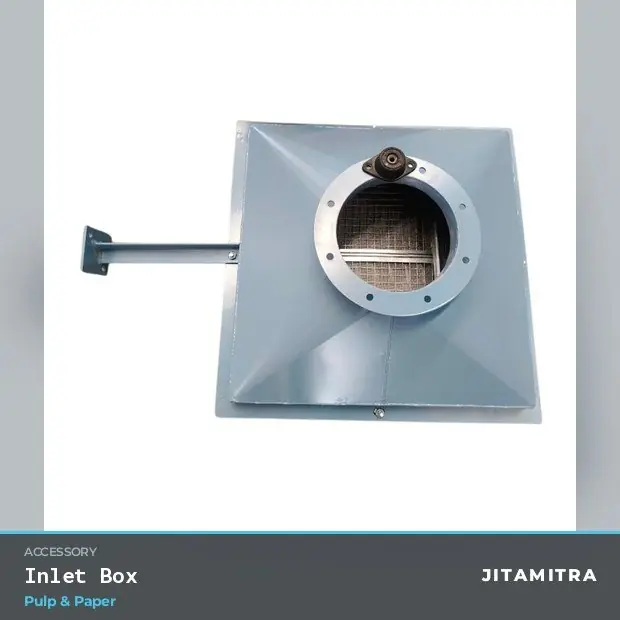
Suction-side louver or inlet-box damper for flow control and shut-off at lower power than outlet throttling.
Adjustable inlet vanes that pre-spin incoming air to throttle output and cut power at part load.
Knife-gate / guillotine damper for positive near-tight shut-off to fully section off a fan or branch.
Manual, pneumatic or electric drive that positions a damper or IGV for fan flow control.
See every accessory and component we have built →
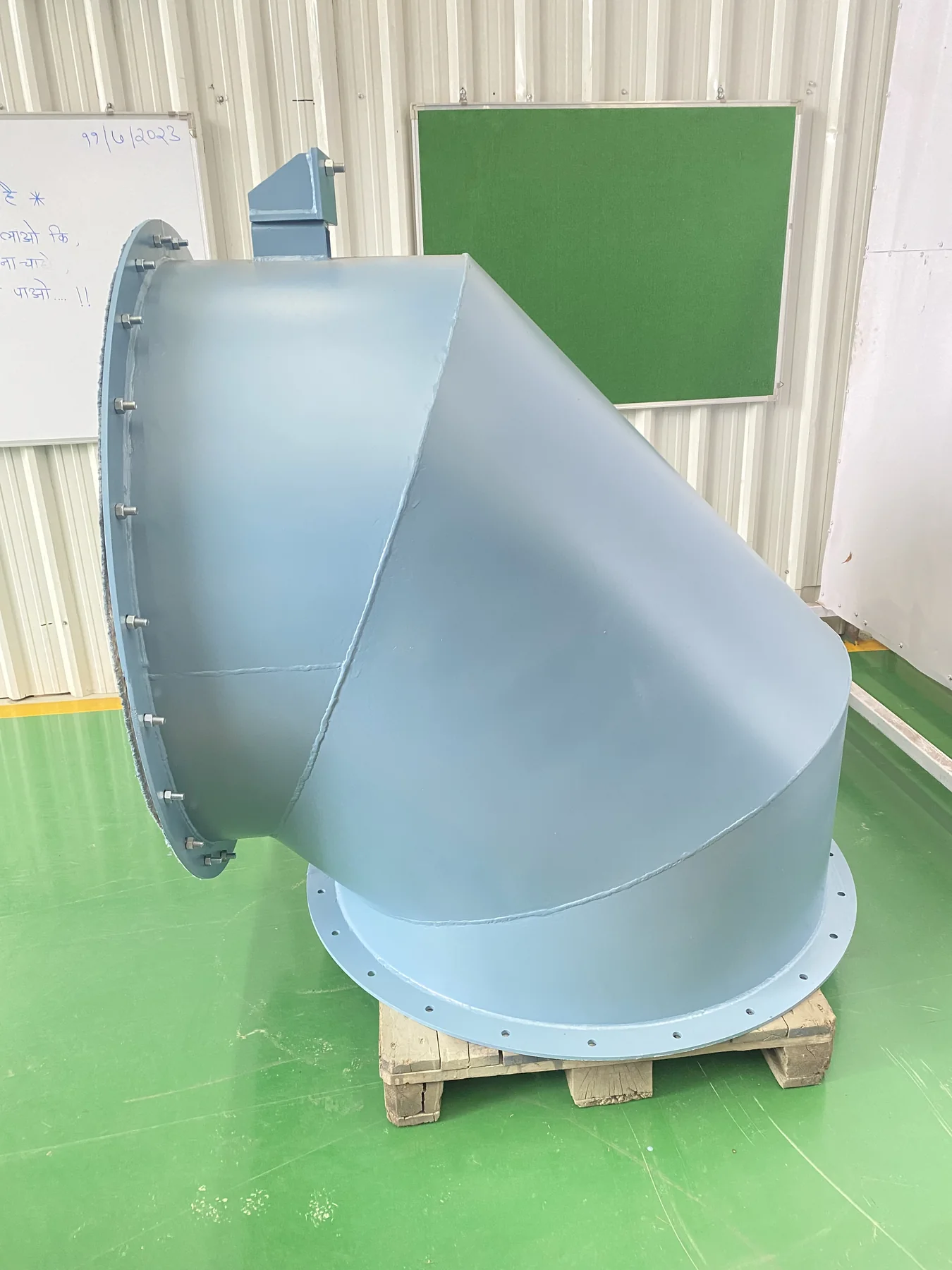
Fabricated suction box that turns the inlet duct 90 degrees in a tight footprint, off the shaft axis.
Converging inlet cone / bell-mouth that guides air smoothly into the impeller eye to protect rated duty.
Loose mating flanges, drilled to ISO/ANSI or a custom pattern, for welding the ductwork to the fan.
Fabricated tapering duct section that adapts the fan inlet/outlet to a different duct size or shape.
Expanding discharge cone that recovers velocity pressure back into static, cutting power on long runs.
Guard over the V-belt drive that protects personnel and contains a broken belt on belt-driven fans.
Metal guard enclosing the shaft coupling on direct-driven fans for personnel safety.
Blocks reverse rotation from back-draft or windmilling, so the motor never starts against a reverse-spinning wheel.
Shaft-penetration seal, ceramic-felt to labyrinth or purgeable, selected by casing pressure and gas.
Finned shaft disc with guard that throws off conducted heat to protect the inboard bearing on hot-gas fans.
Longer impeller hub that moves the wheel off the bearing to reduce heat conducted on hot-gas duty.
Water-cooled bearing housings that shed heat beyond a slinger's reach on high gas-temperature duties.
Non-contact labyrinth bearing isolators that keep dust and water out, outlasting wear-prone lip seals.
Flexible spacer coupling joining motor to fan shaft, passing torque while tolerating slight misalignment.
AR-plate, hardfacing, Ni-hard or ceramic liners protecting the scroll and inlet from abrasion.
Hardfacing and wear overlay on the impeller to extend wheel life in abrasive dust-laden duty.
Gas-touched parts in SS304/SS316, AR steel or an FRP coating for corrosive, abrasive or hygienic duty.
AMCA spark-resistant Type A/B/C construction cutting ignition risk in flammable-gas or dust service.
Coating systems beyond standard finish: epoxy, heat-resistant, and anti-corrosive for harsh duty.
Piped purge-air connection at the shaft seal or bearing that blocks process gas with an outward air barrier.
Built-in water-wash nozzles or rapping to clear sticky deposits in situ without teardown.
Absorptive tubular or elbow attenuator on the fan suction to cut inlet-radiated noise.
Outlet-side attenuator that cuts fan noise carried down or radiated from the discharge duct.
Lined acoustic enclosure over the whole fan set for broadband attenuation when silencers alone fall short.
Mineral-wool acoustic lagging clad onto the casing to cut breakout noise the casing surface radiates.
Flexible fan-to-duct connector with an acoustic barrier layer to break vibration and block noise transfer.
Bearing- or pedestal-mounted vibration sensor or switch to trend levels or trip alarm/shutdown.
Bearing-housing temperature element (PT100 RTD, thermocouple or dial) that warns of bearing distress.
Non-contact shaft pickup for speed feedback to a VFD and zero-speed safety interlock.
Welded suction and discharge tappings with optional gauges to read the pressure the fan actually develops.
PTC or RTD elements embedded in the motor windings to trip it before the insulation overheats.
Integrated vibration, temperature and speed sensors supplied and configured as one condition-monitoring set.
Flexible inlet/outlet sleeve that isolates ducts from fan vibration and absorbs thermal duct growth.
Spring or elastomeric isolators under the fan base to stop vibration reaching the floor or structure.
Concrete-filled steel frame under the fan and motor that adds mass for stable vibration isolation.
Restraint brackets that permit normal isolator movement but arrest fan motion during a seismic event. · engineered on request
Single fabricated steel base carrying fan and motor, works-aligned as one rigid unit for easy install.
Fabricated feet or pedestals that set the fan casing at the required height and discharge orientation.
Welded lifting points on casing and base frame for safe slinging during transport, erection and service.
Anchor bolts, nuts and levelling shims to fix and level the fan on its concrete foundation.
Sheet-metal canopy over the motor and drive to shield them from rain and sun on outdoor installs.
Coarse mesh over open inlet or outlet ports to keep birds, rodents and debris out of the fan.
Safety mesh over an open inlet or outlet to keep hands and debris clear of the rotating impeller.
Gasketed bolted or quick-opening casing door for impeller and scroll access without dismantling.
Horizontally split casing so the wheel and shaft lift out without disturbing inlet and outlet ducts.
Plugged drain at the scroll low point to clear condensate or washdown water and prevent casing corrosion.
Beyond bolt-on accessories, every fan is configured to your duty. These are the build choices we quote against — from arrangement and materials to sealing class and test scope.



Flow, static, gas temperature, application — or attach a spec, GA drawing or a multi-fan schedule. Engineer to engineer.
ISO 9001:2015 quality system · performance-tested to IS 4894 / ISO 5801 / AMCA 210 method · witnessed FAT on request.
*For our standard range. ATEX and special projects need 5 to 7 working days.
This site sets no cookies of its own. Google Analytics loads only if you accept. It sets two cookies, so we can see which fan topics people actually read. Decline and no analytics loads — the site works exactly the same. What we collect →