What is the difference between an FD fan and an ID fan?
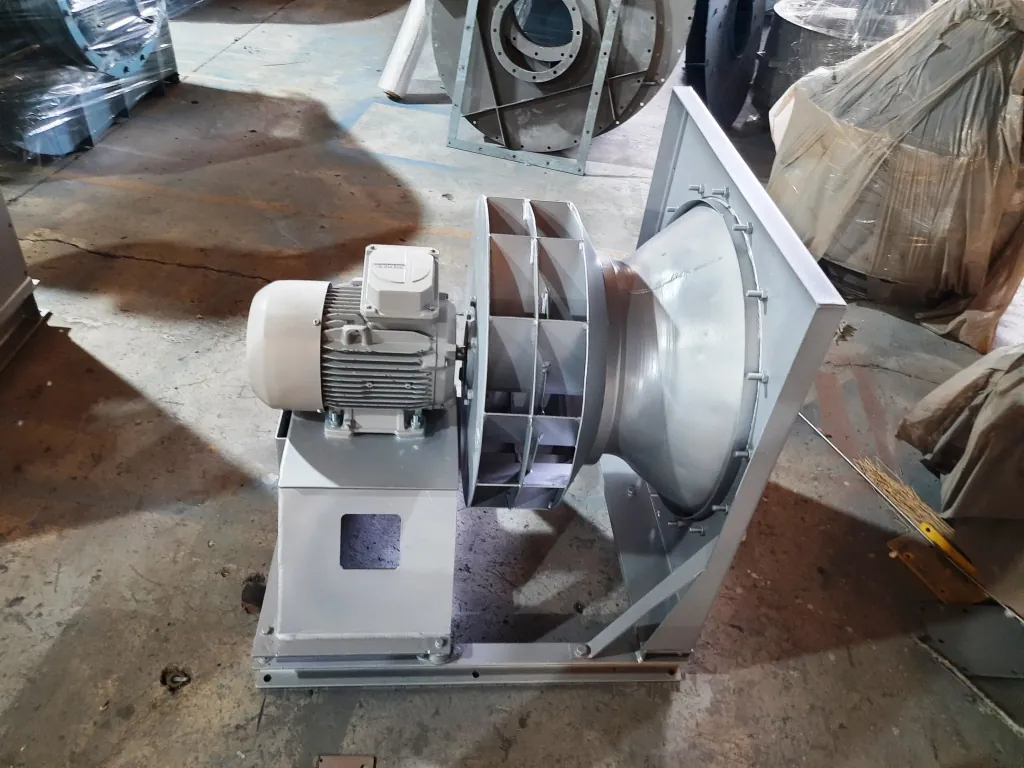
An ID fan pulls; an FD fan pushes. Both maintain airflow through a combustion process, but from opposite ends. The FD fan sits upstream of the burner and pushes clean combustion air into the furnace at positive pressure; the ID fan sits downstream and pulls hot flue gas out to the stack. In a balanced-draft boiler they work as a pair, holding the chamber slightly negative (typically -5 to -10 mmWC). FD fans handle clean ambient or pre-heated air, so the engineering focus is efficiency, curve stability and noise rather than the erosion and corrosion that dominate ID design.
How efficient are your FD fans, and why does it matter?
We design for high static efficiency on standard duty and higher still on high-efficiency airfoil builds. It matters because an FD fan runs continuously at high power. A 200 HP fan operating 8,000 hours a year several points above a lower-efficiency selection saves tens of MWh a year, and over a 20-year life the efficiency choice can outweigh the original purchase price. We tell you the offered efficiency on the quote, not a generic catalogue figure.
How do you keep the fan stable across boiler turndown?
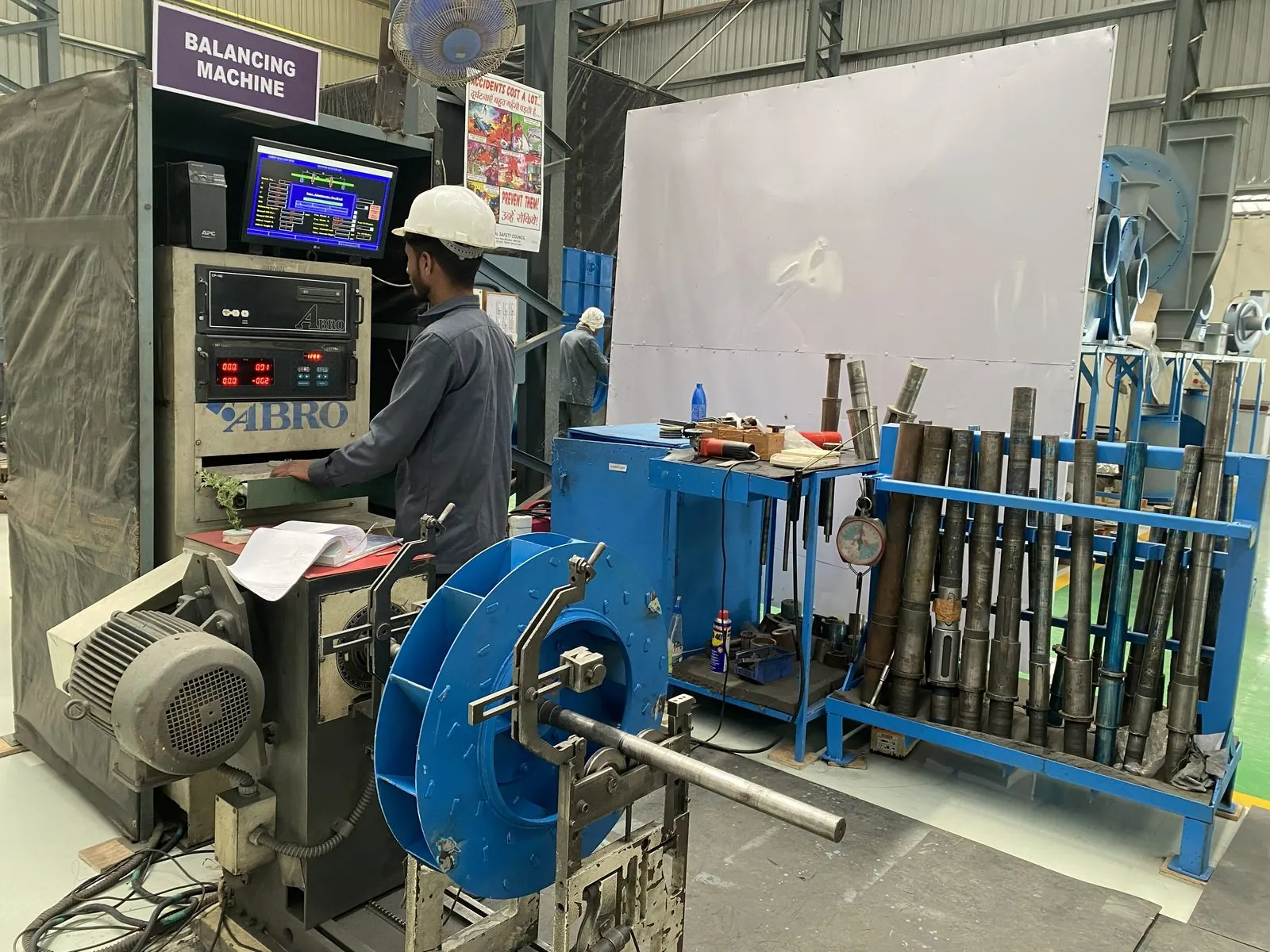
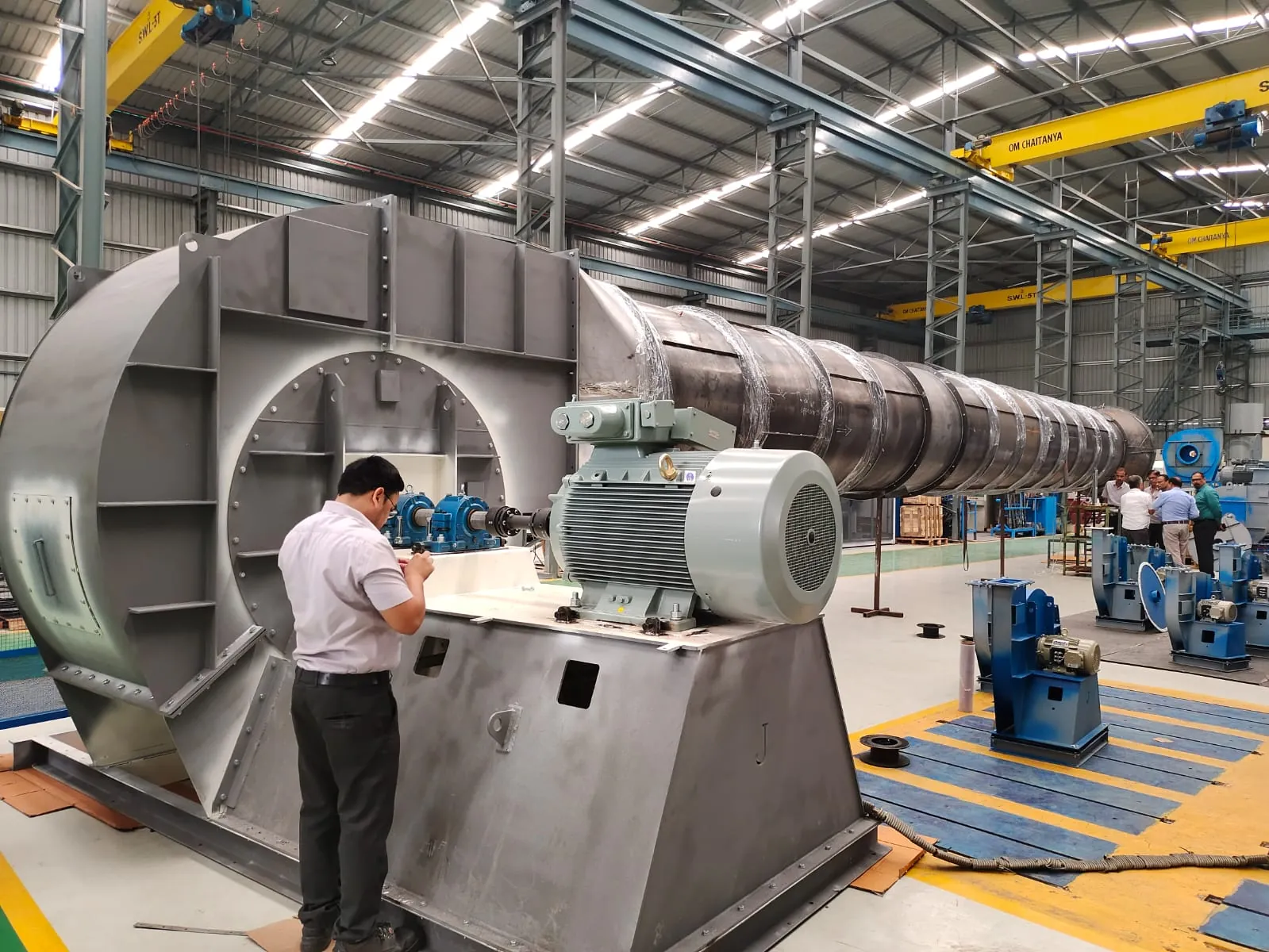
Burners need a steady air supply for stable flame and emissions, and a fan sized onto the flat or rising part of its curve can stall under back-pressure swings. We engineer the duty point onto the falling portion of the pressure-flow curve, typically 5 to 15 percent to the right of the peak, so the fan is inherently stable across the operating range. We then verify the curve on the 200 HP VFD test rig before dispatch. Fans above the rig's 200 HP are run at derated speed and scaled to the specified duty by the fan laws.
What sound levels can you meet, and how?
As standard we design to below 85 dB(A) at 1 m. Below 80 dB(A) is achievable on application with inlet and outlet silencers plus an acoustic-treated casing; below 75 dB(A) requires a custom acoustic enclosure. We use cylindrical or splitter-type inlet silencers for low-frequency content and add casing-wall acoustic lagging where the duct is short or routed through occupied space. Tell us the sound limit and where the fan sits, and we predict and engineer to it.
Should I specify VFD or an inlet vane damper for control?
VFD is our default. FD fan duty turns down meaningfully across boiler load, and VFD speed control is more efficient than an inlet vane damper across the operating range because it avoids the throttling loss at part-load. Inlet vane dampers remain available for legacy retrofit where the existing motor and starter cannot accommodate a drive. We quote whichever your installation calls for.
Can your FD fans handle pre-heated air from an air pre-heater?
Yes. For FD service downstream of an APH the inlet air may run 200 to 350 °C. We upgrade the casing material to IS 2062 or SA 516 Gr 70, size the shaft for thermal expansion, and select bearings for a sustained 80 to 100 °C bearing-housing temperature. The fan is built for your stated inlet temperature and excursion case, not a generic rating.
What is the lead time for a standard FD fan?
A standard engineered FD fan runs roughly 8 to 13 weeks order-to-dispatch: offer in 3 to 5 working days, GA drawing 2 to 3 weeks from PO, manufacture, balance and paint 5 to 9 weeks (about a week shorter than an ID fan because the materials are simpler), and performance test plus FAT 1 week. API 673 refinery duty runs longer, roughly 13 to 19 weeks, with a 5 to 7 working-day offer turnaround.
Do you build FD fans to API 673, CE and ATEX requirements?
Yes. We design and build to API 673 for refinery and fired-heater service as project-specific scope (allow 5 to 7 working days for the offer). CE is self-declared per 2006/42/EC and 2014/35/EU, and ATEX Zone 2/22 is self-declared per 2014/34/EU (Category 3) where the area classification calls for it, with an aluminium impeller on Zone 2 service. To be precise: those are self-declarations of conformity, not third-party certifications. Performance is tested in-house to the IS 4894 / ISO 5801 / AMCA 210 method, not AMCA-certified. Our only third-party certification is ISO 9001:2015.