Do you build fans to API 673, and what is in that scope?
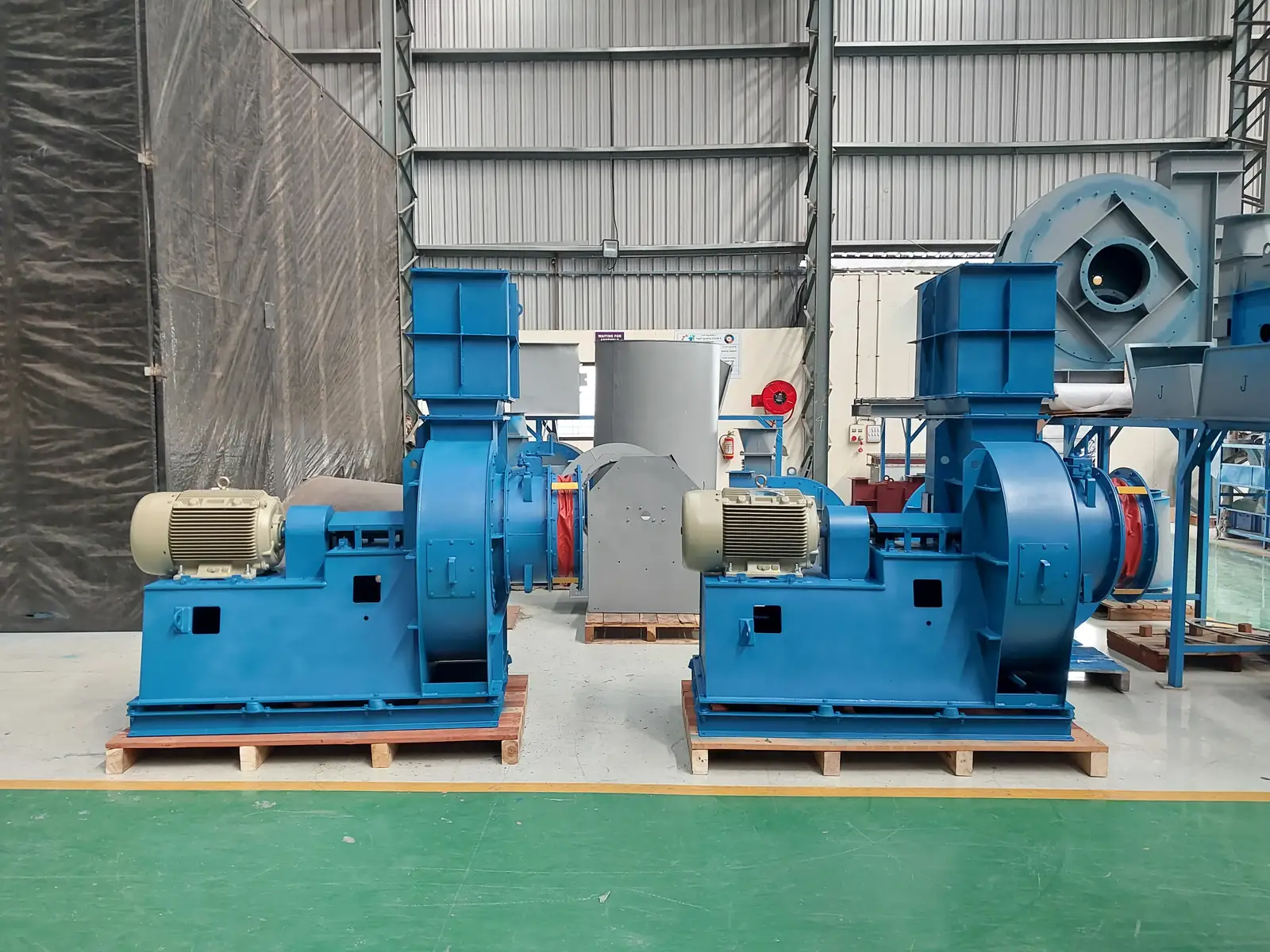
Yes. We design and build to API 673 for oil and gas process-fan duty as project-specific scope. That covers separating the rotor's critical speed from the operating speed by the required margin, a documented lateral rotordynamic and vibration analysis, a witnessed mechanical run, and the full datasheet and documentation package a third-party inspector expects. It is quoted with the offer rather than treated as a stock rating, so allow 5 to 7 working days for the API 673 offer. Send the datasheet and the governing specification and we scope it exactly.
Our area is ATEX Zone 2/22. How do you build a fan that will not be the ignition source?
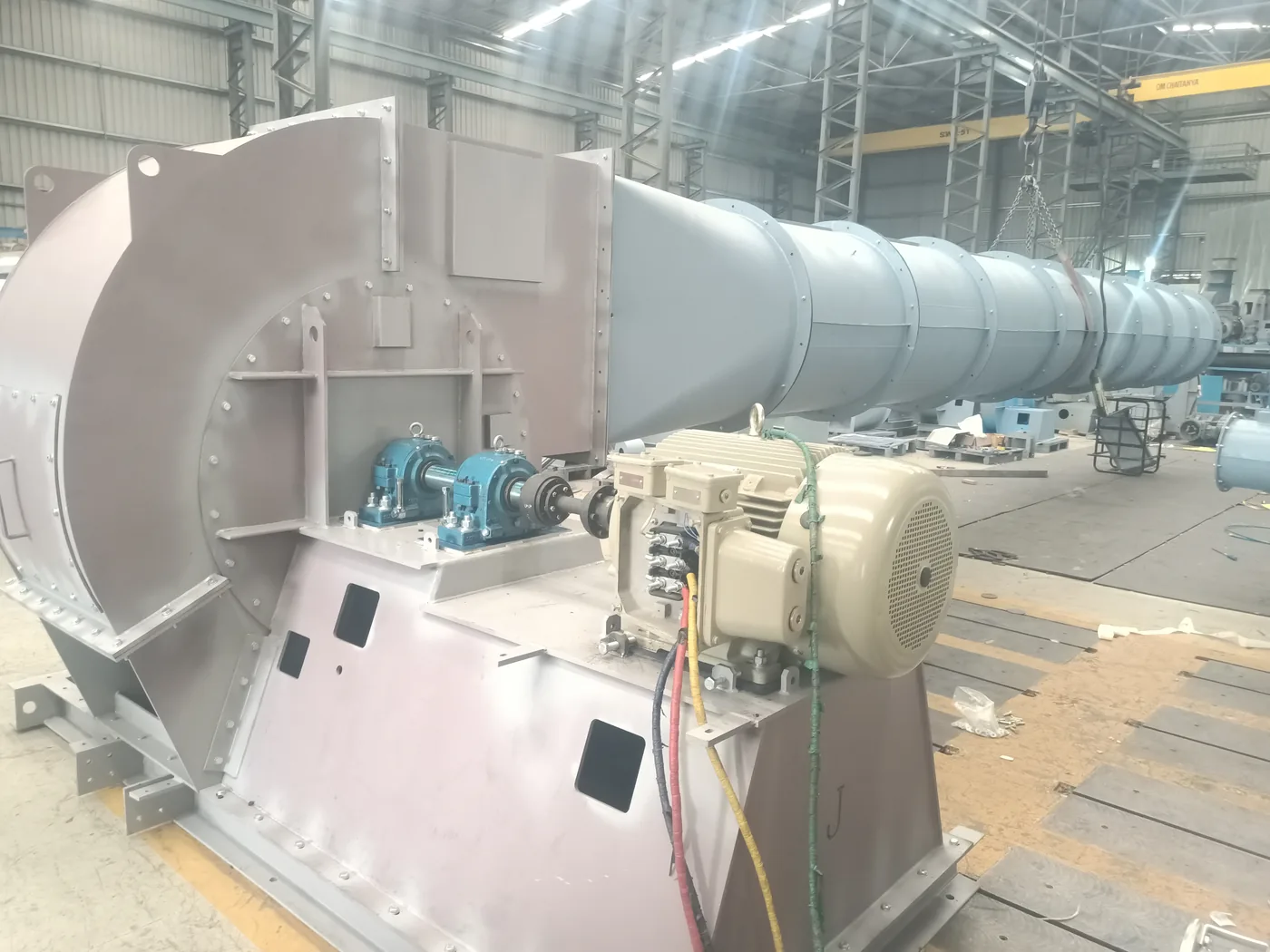
We build the ignition-control scope to your area classification. For a Zone 2/22 space that means non-sparking wheel and casing material pairing, controlled and verified running clearances so the wheel cannot rub, spark-resistant construction, and bearing-temperature monitoring so a hot bearing is caught before it becomes a source. To be precise on the paperwork: ATEX Zone 2/22 is self-declared per 2014/34/EU (Category 3), not a third-party certification. Tell us the zone, gas group and temperature class and we match the construction to it.
Our flare and vapour-recovery gas is sour and corrosive. What metallurgy do you use?
We size the metallurgy to your gas analysis. For sour or corrosive flare, vapour-recovery and off-gas streams we select 316L or higher alloys on the wetted surfaces, sour-service-appropriate material where H₂S content calls for it, and where the gas drops below the acid dew point (typically 120 to 150 °C) we hold the casing wall above dew point with insulation and heat tracing. The right answer depends on your H₂S, moisture and hydrocarbon content, so we engineer it to your stream, not a default alloy.
What is the maximum gas temperature and pressure you handle on oil & gas duty?
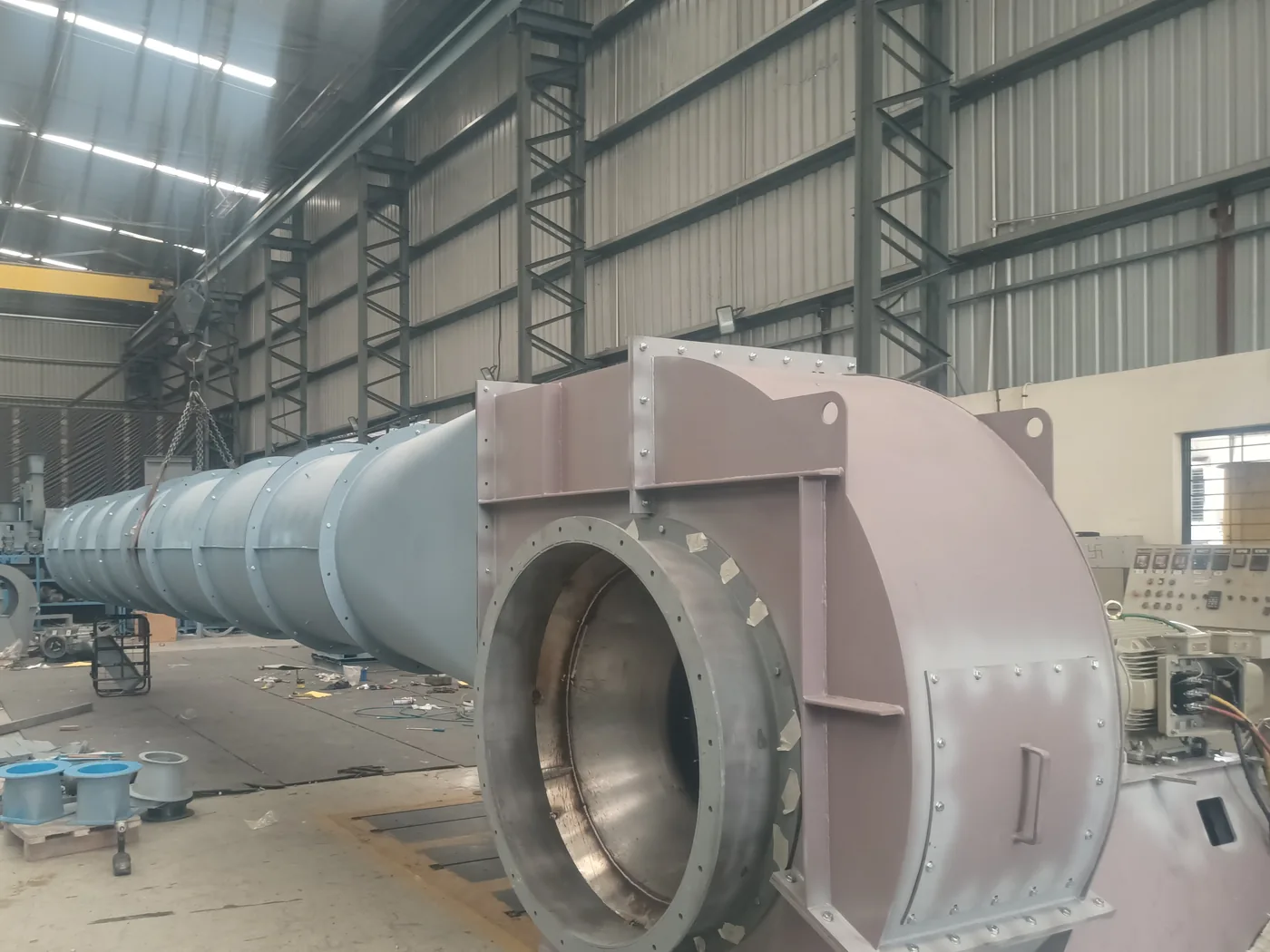
Continuous duty up to 500 °C and up to 2,000 mmWC static across the envelope, with flow to 2,25,000 CMH and drives to 425 HP. Most fired-heater FD and combustion-air duty runs clean and moderate temperature; hotter process and recovery streams get high-temperature construction. Above about 350 °C we fit a shaft cooling disc to keep heat off the bearings and add expansion joints for the thermal growth. The fan is built for your stated conditions and excursion case, not a generic rating.
Can you build a replacement to match our existing oil & gas fan's duty and footprint?
Yes. We reverse-engineer to the existing duty point (flow, static pressure, gas temperature, density and stream analysis), bearing centres, inlet/outlet orientation and foundation bolt pattern so the unit drops onto the existing base and ducting, whether it is a fired-heater FD fan, a combustion-air blower, a vapour-recovery blower or a hazardous-area ventilation fan. Made to your installation and its governing specification, not a nearest-catalogue substitute. Send the old GA, the nameplate, the datasheet and a curve if you have one, and we match it.
Do you performance-test the fans, and what about AMCA, CE, ATEX and quality certification?
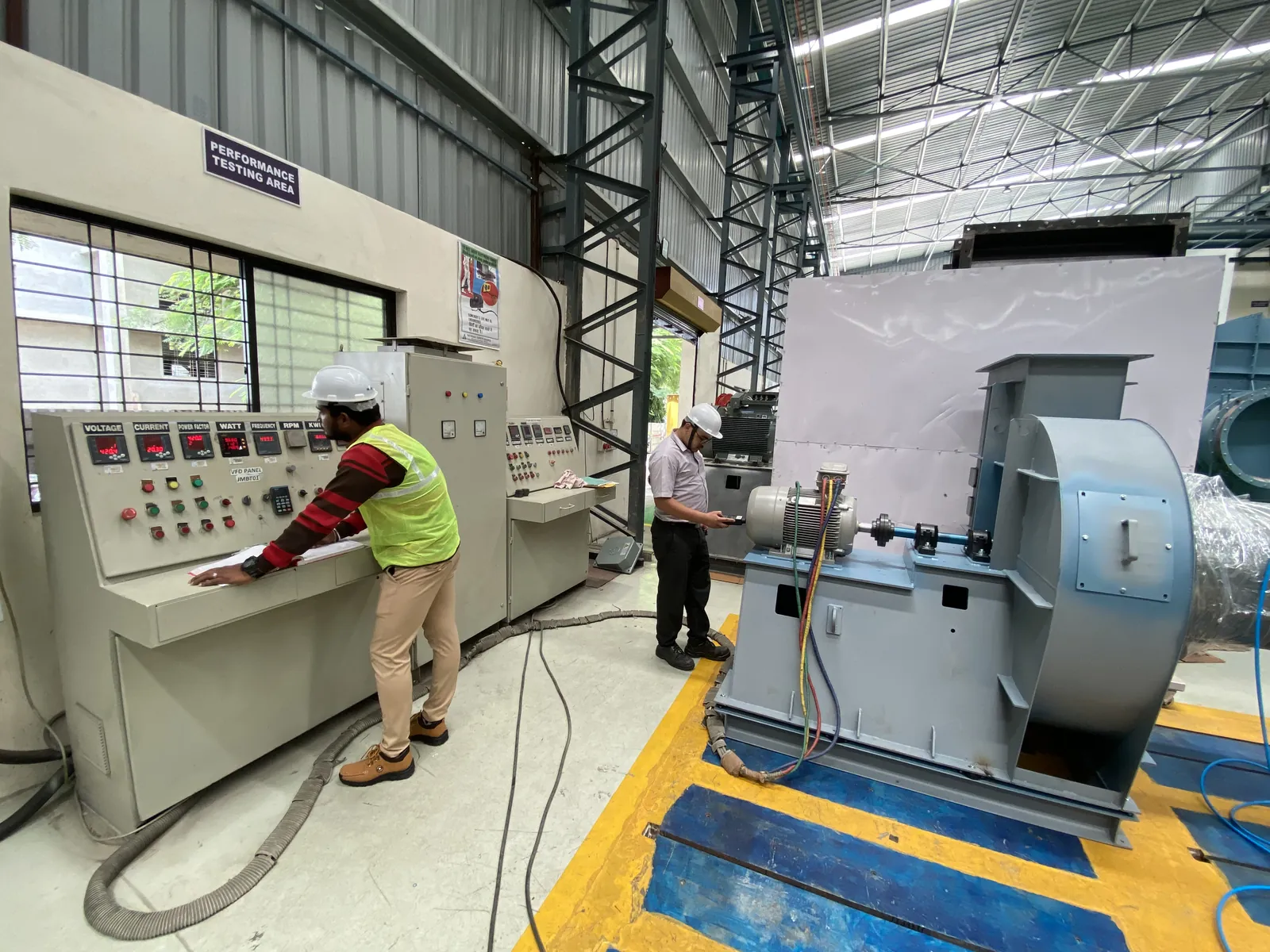
Every fan is performance-tested in-house to the IS 4894 / ISO 5801 / AMCA 210 method on our 200 HP VFD test rig, and dynamically balanced to ISO 21940 G6.3 as standard (G2.5 / G1.0 on application). To be precise: that in-house testing is to the IS 4894 / ISO 5801 / AMCA 210 method, not AMCA-certified, and we are not an AMCA member; CE is self-declared per 2006/42/EC and 2014/35/EU, and ATEX Zone 2/22 is self-declared per 2014/34/EU (Category 3) where the area classification calls for it. Those are self-declarations of conformity, not third-party certifications. ISO 9001:2015 is our only third-party certification. Our API 673 builds are independently verified — by three inspection agencies and the end customer — with the full record held in our quality file; ask us and we will walk you through it.