How is a combustion air fan different from an FD fan?
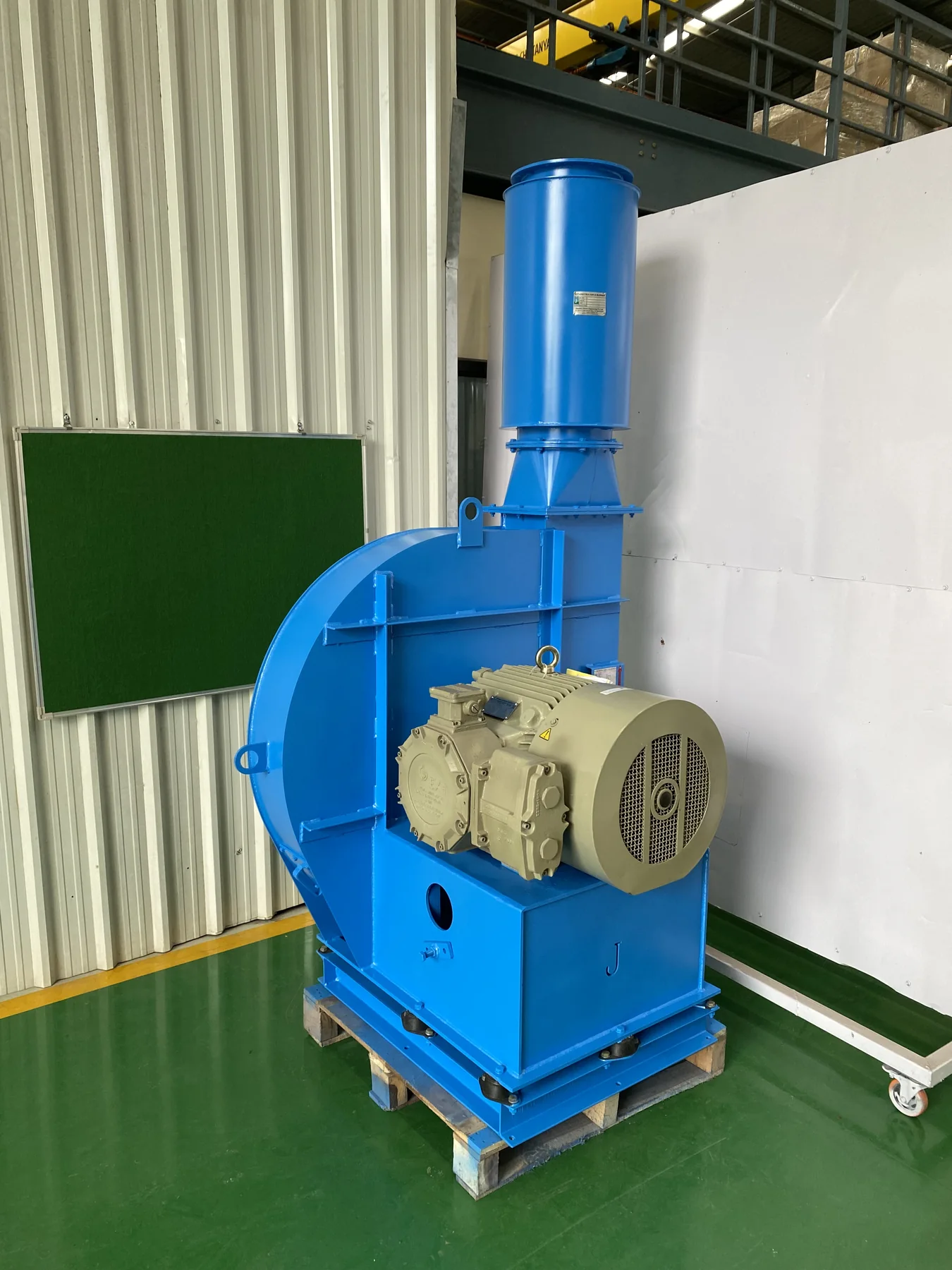
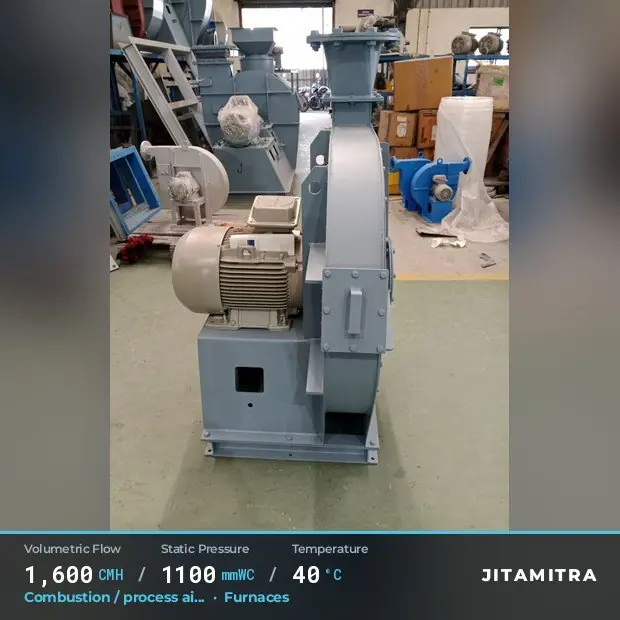
An FD fan supplies bulk combustion air to a boiler or large fired-heater train at sized capacity, controlled by inlet damper or VFD against boiler load. A combustion-air fan is dedicated to one burner, fired heater or process oven — often one fan per burner, often inside the burner OEM's control package. It interfaces with the BMS for start permissive, flow proving, fan-running confirmation and low-air trip, and it must hold its point through the ignition transient. That BMS-grade reliability and instrumentation, not the airflow alone, is what sets it apart.
What BMS interface instrumentation do you provide?
Four items as standard, specified on the datasheet at quotation stage. An airflow proving DP switch across the fan or in the discharge duct, wired to the BMS start permissive; a current-sensing relay on the motor for fan-running confirmation; a second DP switch at a lower setpoint, wired to the burner shutdown trip; and an inlet temperature transmitter where the air is APH-preheated, for density correction in the air-fuel ratio calculation. All supplied loose for site-wiring into the burner OEM's BMS panel. Pre-wired junction-box-on-baseplate packaging is available on application.
How do you keep the fan from stalling during burner light-off?
The curve is sized so the operating point sits well to the right of the peak. At light-off the burner resistance shifts quickly, so a fan sized too close to its peak can be pushed into stall and trip the burner. We engineer the duty point onto the stable branch with margin for the ignition-transient flow swing, and the margin is documented on the curve we issue. Standard practice on every combustion-air fan we build.
Do you build combustion-air fans to API 673?
Yes. For refinery and petrochem fans, the full API 673 documentation envelope is the default — combustion-air fans on individual burners are almost always API 673 in oil and gas tenders. Allow 5 to 7 working days for the offer and 13-19 weeks order-to-dispatch on API 673 / refinery duty. It is project-specific scope built to your tender, not a generic rating.
What ATEX scope do you offer for refinery and petrochem service?
ATEX Zone 2 is self-declared per 2014/34/EU (Category 3) for combustion-air fans inside a hazardous-area envelope — aluminium impeller, bronze rub rings, bonded earthing, anti-static coatings and an Ex-rated motor (Ex e / Ex nA). To be precise: ATEX Zone 2 here is a self-declaration of conformity, not a third-party certification; our only third-party certification is ISO 9001:2015.
Can the fan handle APH-preheated combustion air?
Yes. We build for inlet air from ambient up to 350 °C for air-preheater-fed combustion air, with stainless construction and an inlet temperature transmitter so the BMS can correct the air-fuel ratio for the lower density. Higher inlet temperature is available with special metallurgy on enquiry. The fan is sized to your stated inlet condition, not a generic ambient rating.
Do you performance-test before dispatch, and can we witness it?
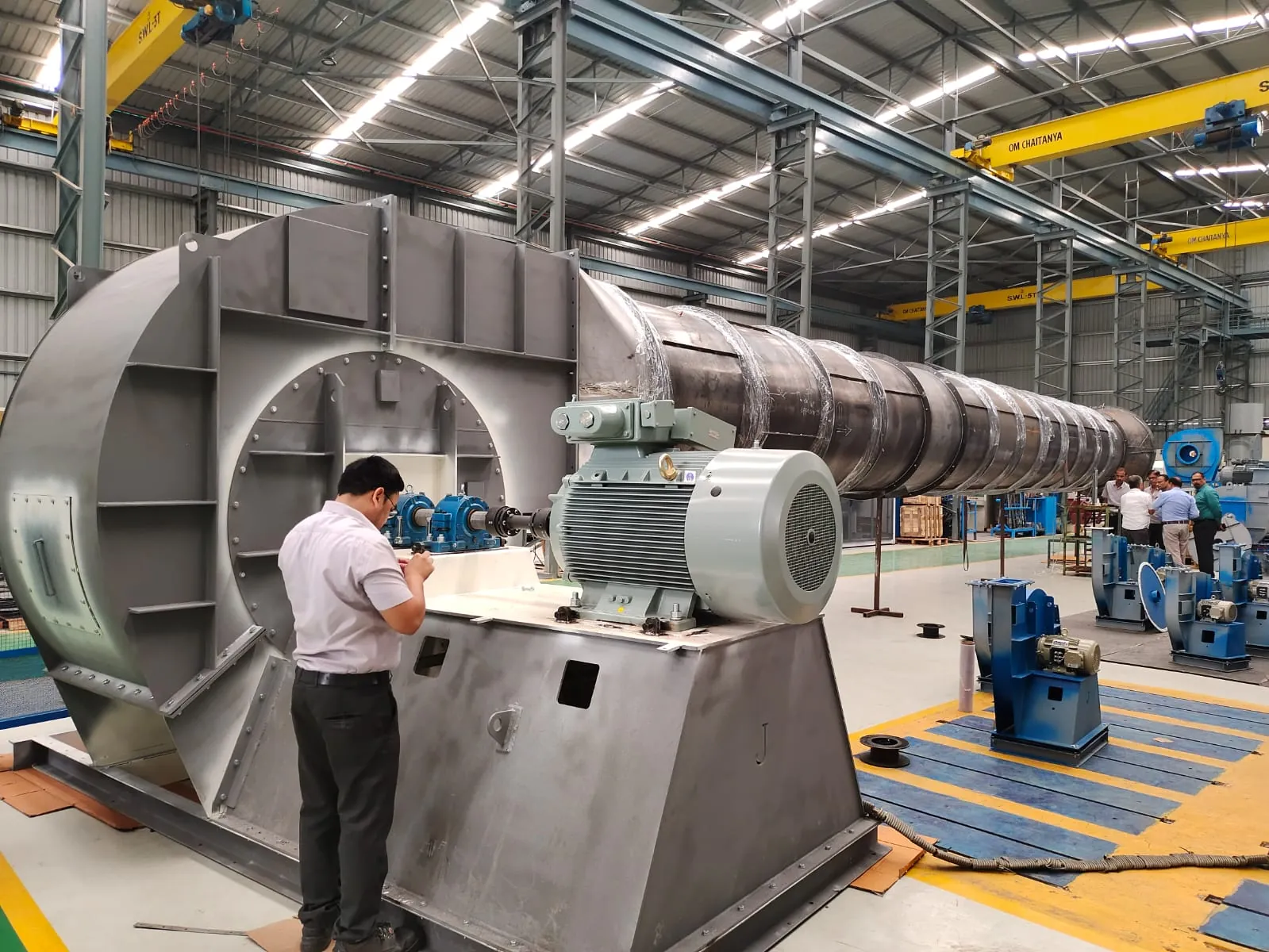
Yes. Every fan is performance-tested in-house to the IS 4894 / ISO 5801 / AMCA 210 method on our 200 HP VFD test rig, and dynamically balanced to ISO 21940 G6.3 as standard (G2.5 / G1.0 on application). The test and FAT take about a week — one to two weeks on API 673 / refinery duty — and are customer-witnessed on request. You see the curve and the balance report before the fan leaves the floor.
How fast can you deliver a combustion-air fan?
Standard duty runs roughly 9-13 weeks order-to-dispatch — offer in 3 to 5 working days, GA approval 2-3 weeks, manufacture, balance and paint 6-10 weeks, test and FAT 1 week. API 673 / refinery duty runs 13-19 weeks — offer in 5 to 7 working days, GA 3-4 weeks, manufacture 10-14 weeks, test and FAT 1-2 weeks customer-witnessed. We confirm a dated commitment against your milestone, not a placeholder.