| Who | A turbogenerator packager in western India, supplying a 2.5 MW TG set to a sugar co-generation plant in Maharashtra |
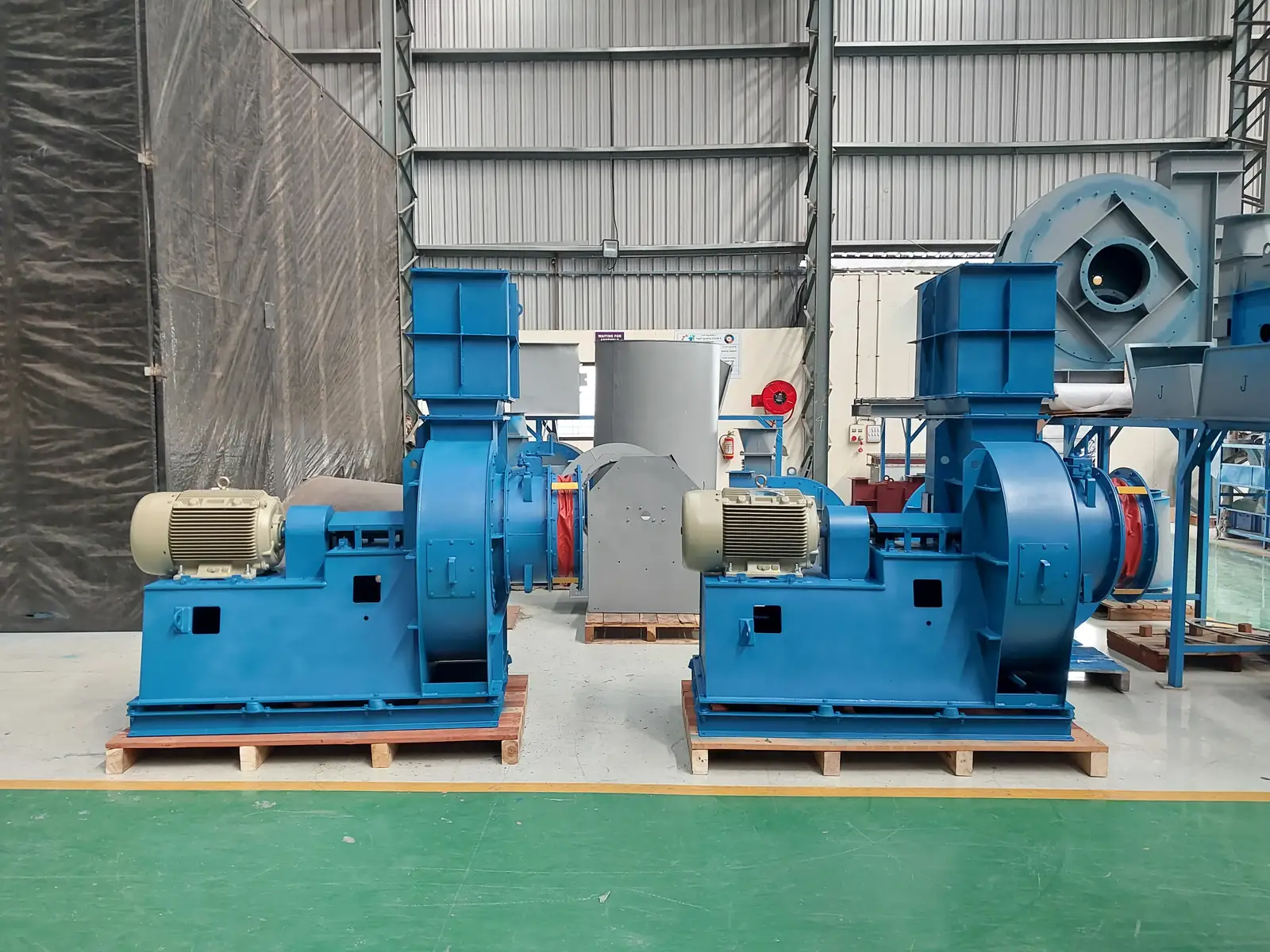
| Equipment | Generator cooling / ventilation (GVC) centrifugal blower — 1,100 CMH / 300 mmWC / 3 HP, driven by a bought-out 2.2 kW 2-pole motor (rated 4.2 A) |
| Complaint | After about a week of continuous running during commissioning, the blower motor tripped and would not restart — drawing over 6.0 A against a 4.2 A nameplate |
| Service | Remote-guided electrical fault localisation, on-site measurement protocol, full evidence capture, warranty claim raised against the motor manufacturer |
| Response | Complaint acknowledged and owned the same day; measurement set defined, results reviewed, warranty claim instructed within days |
| Result | Fault localised unambiguously to a Y-phase winding-to-earth failure in the bought-out motor. The blower's aerodynamic and mechanical side was cleared. Warranty claim raised with full serial and nameplate data. Our record documents the diagnosis and the claim; it does not carry the motor manufacturer's teardown verdict or a re-commissioning sign-off. |
A generator cooling and ventilation blower is a small fan with a large consequence. On a 2.5 MW turbogenerator set it keeps the generator's air path moving. The duty is modest — 1,100 CMH at 300 mmWC on 3 HP — but availability is not optional: if the GVC blower is down, the packager cannot hand the set over, and on a sugar co-generation plant mid-commissioning a stalled handover stalls the season plan. Commissioning was run by the packager's electrical engineer at site, with our Tech Services engineer supporting from our end.
The blower ran cleanly for about a week. Then, one evening, the motor was found tripped. On restart it tripped again — and again. The site's report was blunt: the motor was drawing more than 6.0 A against a rated current of 4.2 A.
When a fan motor pulls high current, the obvious suspect is the fan: an impeller rubbing, a bearing seizing, a damper left wide open so the fan runs out on its curve into the high-flow, high-power corner. "The fan is overloading the motor" is the reflex diagnosis on a new installation — and it has sent many engineers to strip a perfectly good blower.
It was wrong here. Nothing mechanical had changed in that week: same duty, same system resistance, and a full week of healthy running at that operating point. A fan that suddenly needs 45% more current at the same duty is not an aerodynamic story. Something electrical had changed.
We asked for two measurements before anything else. Not a strip-down — two meters.
Ruled out first, on evidence, in this order:
What we found. The site took an insulation-resistance test and a three-phase winding-resistance balance:
That is not an ambiguous result. A phase shorted to the frame, an asymmetric winding and the consequent over-current draw form a single closed chain. The fan was innocent. The motor — a bought-out, brand-name component still inside its warranty period — had an early-life winding-to-earth failure.
5 Whys 1. Why did the motor trip? — It was drawing over-current (>6.0 A vs 4.2 A rated). 2. Why the over-current? — One phase (Y) of the winding was faulted. 3. Why was the phase faulted? — Its insulation to the frame had broken down (0.0 MΩ to earth). 4. Why did the insulation break down? — It failed early in life, about a week into first running under commissioning duty. 5. Why did it fail early? — A latent defect in a bought-out component surfaced under first operating stress, because no electrical acceptance test stood between the supplier's box and the customer's commissioning.
The reusable lesson: A bought-out component you do not test is a defect you have agreed to discover at your customer's site. The cost of an IR test and a winding-balance check in your own works is minutes. The cost of finding the same fault at a commissioning site is a stalled handover.
What we did. We characterised the fault fully on site — insulation resistance, phase-resistance balance, running current, and photographs including the motor nameplate. We took ownership of the warranty route rather than leaving the customer to chase it, and instructed a claim against the motor manufacturer quoting the serial number, nameplate data and the measured fault set, so it landed complete rather than bouncing back for information. We did not open the motor ourselves — that is the fastest way to lose a warranty.
What the record supports:
The transferable lesson: when a fan motor "pulls high current", the first two instruments to reach for are a megger and a milliohm meter — not a spanner. Current is a symptom shared by aerodynamics, mechanics and electrics; only measurement tells you which. Phase-to-earth IR plus a three-phase winding-resistance balance take ten minutes and will either exonerate the motor or convict it, before anyone loosens a bolt. And every bought-out motor that leaves your works untested is a fault you have chosen to let your customer find.
We service centrifugal fans and blowers of any make. Over-current trips, vibration, bearing life, flow shortfall, noise, balancing to ISO 21940, performance verification tested to the IS 4894 / ISO 5801 / AMCA 210 method — if it moves air and it is misbehaving, we will measure it before we quote you a part.
— Jitamitra Electro Engineering · Technical Services
Engineered for Every Application.
Not necessarily. The obvious suspect is the fan — an impeller rubbing, a bearing seizing, a damper left wide open. That reflex has sent many engineers to strip a perfectly good blower. Here the motor drew over 6.0 A against a 4.2 A nameplate after a full week of healthy running at the same operating point. Something electrical had changed.
Two meters, not a strip-down. Phase-to-earth insulation resistance and a three-phase winding-resistance balance take ten minutes and will either exonerate the motor or convict it before anyone loosens a bolt. When a fan motor pulls high current, the first two instruments to reach for are a megger and a milliohm meter — not a spanner.
Unambiguous. Insulation resistance, Y-phase to ground: 0.0 MΩ — a dead short to earth. Winding resistance R = 10.0 Ω, Y = 8.4 Ω, B = 10.0 Ω, Y low against two healthy phases. A phase shorted to the frame, an asymmetric winding and the consequent over-current draw form a single closed chain.
No. We did not open the motor ourselves — that is the fastest way to lose a warranty. We characterised the fault on site instead: insulation resistance, phase-resistance balance, running current and photographs including the nameplate, then instructed a claim quoting the serial number, nameplate data and the measured fault set, so it landed complete rather than bouncing back for information.
Our file stops where the warranty claim was raised. It does not contain the motor manufacturer's teardown verdict, a replacement-motor test reading, or a re-commissioning sign-off. We will not claim a closure we cannot evidence. What the record does prove is where the fault was, and that the blower's aerodynamic and mechanical side was cleared.
Test the bought-out component in your own works. A bought-out component you do not test is a defect you have agreed to discover at your customer's site. Pre-dispatch electrical acceptance is now a standing rule for us — phase-to-earth IR, R/Y/B winding-resistance balance, no-load current against nameplate, recorded on the job traveller.
Flow, static, gas temperature, application — or attach a spec, GA drawing or a multi-fan schedule. Engineer to engineer.
ISO 9001:2015 quality system · performance-tested to IS 4894 / ISO 5801 / AMCA 210 method · witnessed FAT on request.
*For our standard range. ATEX and special projects need 5 to 7 working days.
This site sets no cookies of its own. Google Analytics loads only if you accept. It sets two cookies, so we can see which fan topics people actually read. Decline and no analytics loads — the site works exactly the same. What we collect →