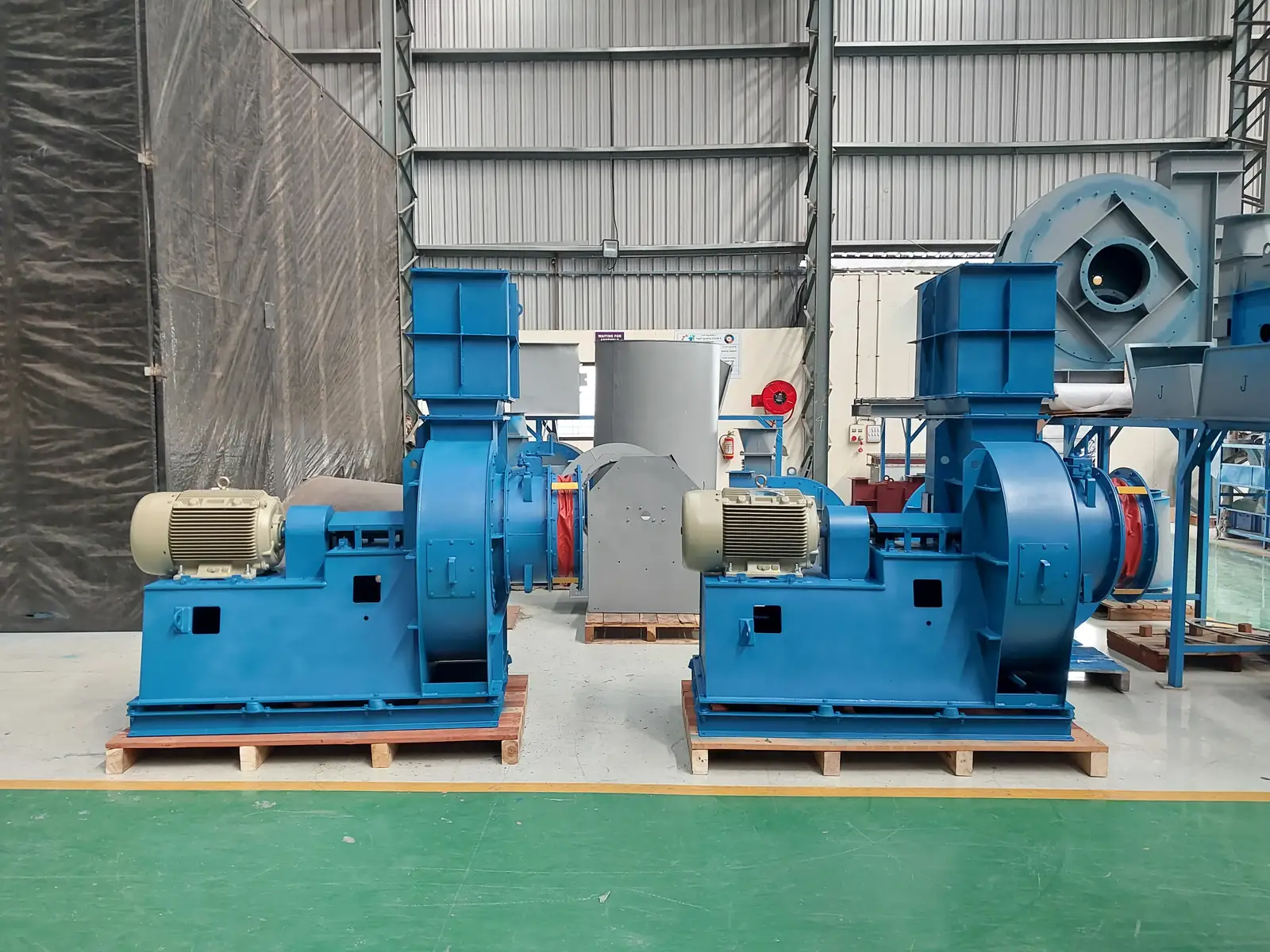
| Who | A vacuum-systems package OEM in India, building a gas/vapour-compression (GVC) skid for a metals plant |
| Equipment | Jitamitra package blowers, 1,100 CMH / 300 mmWC / 3 HP, on a bought-out drive motor |
| Complaint | "Motor tripped on overload." On check, insulation resistance to ground read zero — the winding was shorted to earth |
| Service | Electrical evidence capture, elimination of the aerodynamic and mechanical suspects, warranty routed to the motor OEM |
| Response | Replacement motor sourced and the supplier claim initiated within a day of the site report |
| Result | Fault isolated to the bought-out motor, not the fan. Replacement arranged, supplier claim raised, commissioning spec changed. No post-repair verification or customer closure is on record — and we claim none |
A vacuum-systems OEM had built a gas/vapour-compression package for a metals plant. Inside it sat Jitamitra blowers at a modest-looking duty — 1,100 CMH at 300 mmWC on a 3 HP drive — with no slack in it. In a GVC package the blower is not an auxiliary; it is the thing that holds the vacuum. When it stops, the process behind it stops, and nobody is calling to discuss fan curves. They are asking when the skid runs again.
Three parties sat in the chain: we supplied the blowers, the vacuum OEM integrated them, a package builder delivered the skid. By the time a fault reaches the fan maker, it has been through two escalations.
The site's first message said the motor tripped on overload.
Overload is the most misleading word in fan service. Nine times out of ten, a fan drawing high current is telling you about the system, not itself — a damper opened past design, a duct run modified after commissioning, gas denser than the sizing case. The fan is doing more work than it was sized for, and the motor reports that in amps. Usually, that is the right suspect.
Not here. In the same mail was the measurement that ended the argument: insulation resistance to ground was zero. The motor was showing a short to ground. That is an earth fault wearing an overload's clothing. A team chasing "overload" would have burned a week on dampers and fan selection, on a fan in perfect health.
A second signal arrived almost in passing, from the package builder's quality team: the same failure had occurred the previous month, on a different project at a different plant, on a motor of the same make.
We worked the suspects cheapest-to-eliminate first.
Ruled out — the system. A genuine aerodynamic overload shows elevated running current without an insulation collapse. An earth fault does not arrive because a damper opened.
Ruled out — the fan. No impeller distress, no casing damage, no bearing symptoms, no vibration complaint. The rotating assembly was never in question; the electrical half of the drive was.
Found — the bought-out motor. Winding insulation shorted to earth, confirmed by the zero IR-to-ground reading at site. An in-service electrical failure on a bought-in component we mount, not one we manufacture.
Why did the motor trip? It drew fault current. Why fault current? The winding was shorted to earth. Why was it shorted? The insulation to ground had failed — IR read zero. Why did the insulation fail? Not recorded at site. On vapour-laden vacuum duty the candidates are condensate ingress, or an insulation-quality escape at the motor builder. Why was it not caught earlier? No baseline insulation reading was taken at commissioning — so degradation could only be discovered at the trip.
The reusable lesson: A trip is a symptom, not a diagnosis. Read the protection's reason for tripping, not the label on the relay — an earth fault and an aerodynamic overload both end with a stopped motor, and only one of them is the fan's problem.
We confirmed the electrical evidence, gave the package OEM the three inputs it needed to raise a warranty complaint on the motor supplier — site address, site contact, job reference — and a replacement was arranged inside a day.
Honestly — the record supports exactly this much:
Before you spend a week on the aerodynamics, spend ten minutes on the electrics. A megger to ground is a five-minute test that can save a five-day investigation. And when the same bought-out component fails twice, that is one supplier problem, not two site incidents.
We service centrifugal fans and blowers of any make — not only ours. If a fan on your plant is tripping, vibrating, surging or under-delivering, we will find out why — and tell you honestly if the answer is not the fan.
— Jitamitra Electro Engineering · Technical Services
Engineered for Every Application.
Usually it is the system, not the fan — nine times out of ten a fan drawing high current is telling you about the system, not itself: a damper opened past design, a duct run modified after commissioning, gas denser than the sizing case. On this 1,100 CMH at 300 mmWC job it was not. Insulation resistance to ground read zero: an earth fault wearing an overload's clothing.
A megger to ground. Before you spend a week on the aerodynamics, spend ten minutes on the electrics — a megger to ground is a five-minute test that can save a five-day investigation. A genuine aerodynamic overload shows elevated running current without an insulation collapse; an earth fault does not arrive because a damper opened.
We route it. Here the fault was an in-service electrical failure on a bought-in component we mount, not one we manufacture. We confirmed the electrical evidence and gave the package OEM the three inputs it needed to raise a warranty complaint on the motor supplier — site address, site contact, job reference. A replacement was arranged inside a day.
Take a baseline. On this job no baseline insulation reading was taken at commissioning, so degradation could only be discovered at the trip. We now capture baseline insulation resistance and no-load current at commissioning, and for vacuum and vapour duty we verify motor ingress protection and anti-condensation provision — IP and insulation class, space heaters, drain plugs.
No — treat it as a pattern. One motor failing to earth is an incident; the same make failing on two unrelated projects weeks apart is a supplier-quality signal. Here the package builder's quality team reported the same failure the previous month, on a different project at a different plant. We escalated it as one supplier problem, not two site incidents.
No. The record holds no post-repair megger reading, no re-commissioning sign-off and no customer closure. The replacement was arranged; whether it was fitted and the claim honoured is not evidenced, and we will not claim it. What the record does support is where the fault was not — impeller, casing, bearings, aerodynamics — and what it was.
Flow, static, gas temperature, application — or attach a spec, GA drawing or a multi-fan schedule. Engineer to engineer.
ISO 9001:2015 quality system · performance-tested to IS 4894 / ISO 5801 / AMCA 210 method · witnessed FAT on request.
*For our standard range. ATEX and special projects need 5 to 7 working days.
This site sets no cookies of its own. Google Analytics loads only if you accept. It sets two cookies, so we can see which fan topics people actually read. Decline and no analytics loads — the site works exactly the same. What we collect →