We repair, refurbish, re-rate and re-part centrifugal fans and blowers — regardless of who built them — in our shop or in your plant. Shafts, bearings, impellers, hardfacing and drop-in spares, with every rotor re-balanced to ISO 21940 before it ships.
839 service events over 12 years.
Most fan makers will only touch their own machines. Jitamitra's aftermarket business is built the other way round: we repair, overhaul, hardface, re-impeller, retrofit and re-part any make of centrifugal fan or blower — OEM, competitor, obsolete or orphaned. When a worn wheel has no drawing, we reverse-engineer it from the part itself and supply a drop-in replacement that fits the original casing and shaft.
Every job runs on the same fan engineering we use to build new machines: rotors re-balanced to ISO 21940 (G6.3 general, G2.5 for critical and API service), in-situ vibration judged to ISO 14694, and chromium-carbide weld overlay for abrasive duty. Work happens in the shop or in the field, and where the honest answer is "rebuild, not replace" we say so — with costed options, expected downtime and payback, so the decision rests on facts rather than a sales pitch.
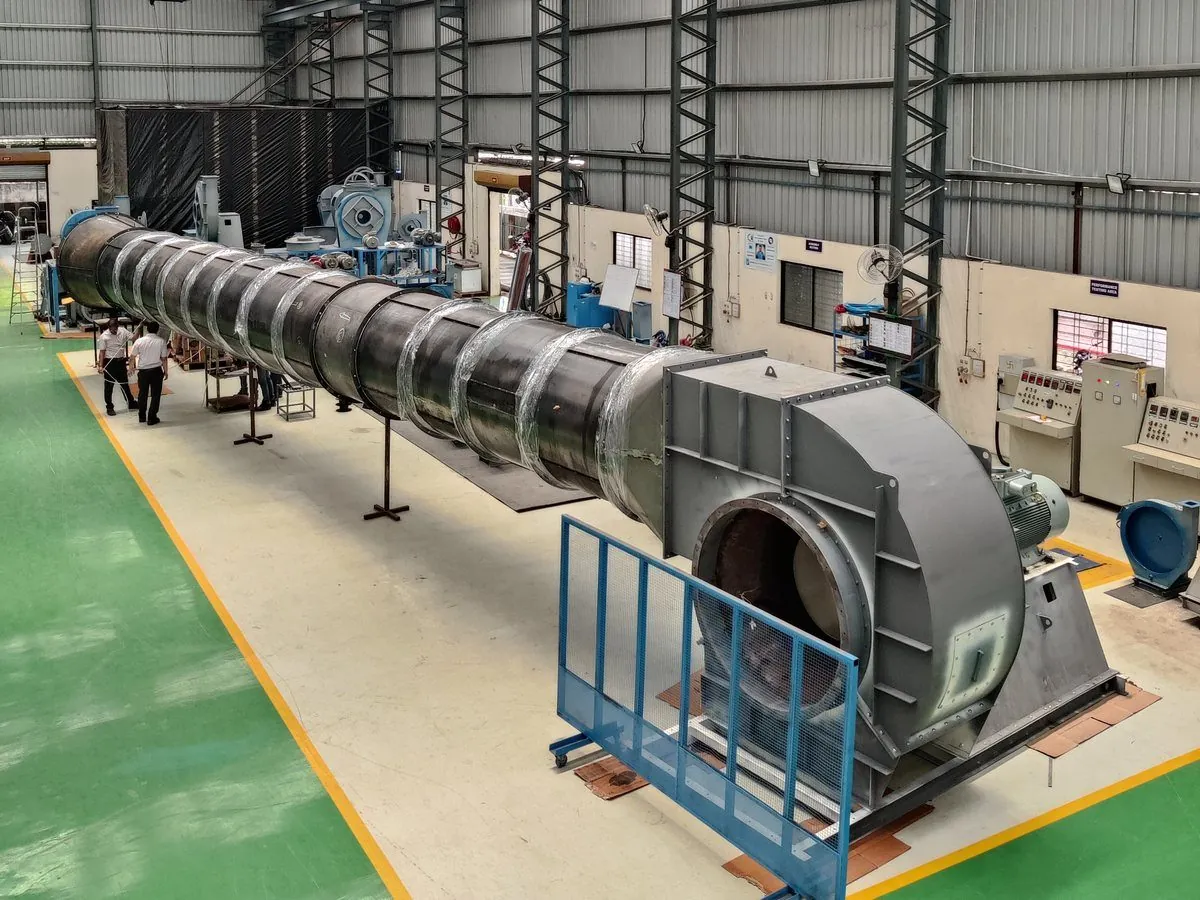
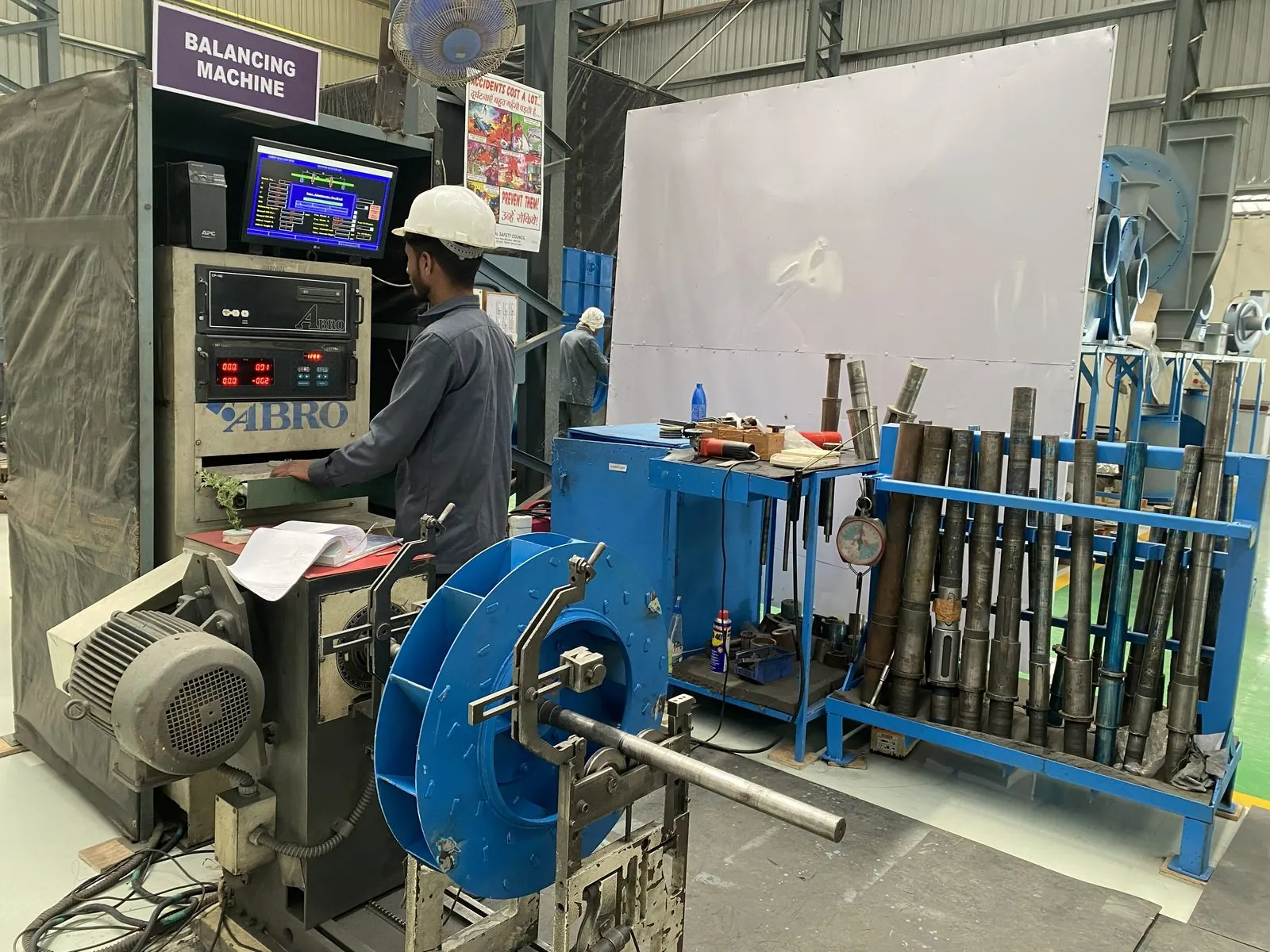
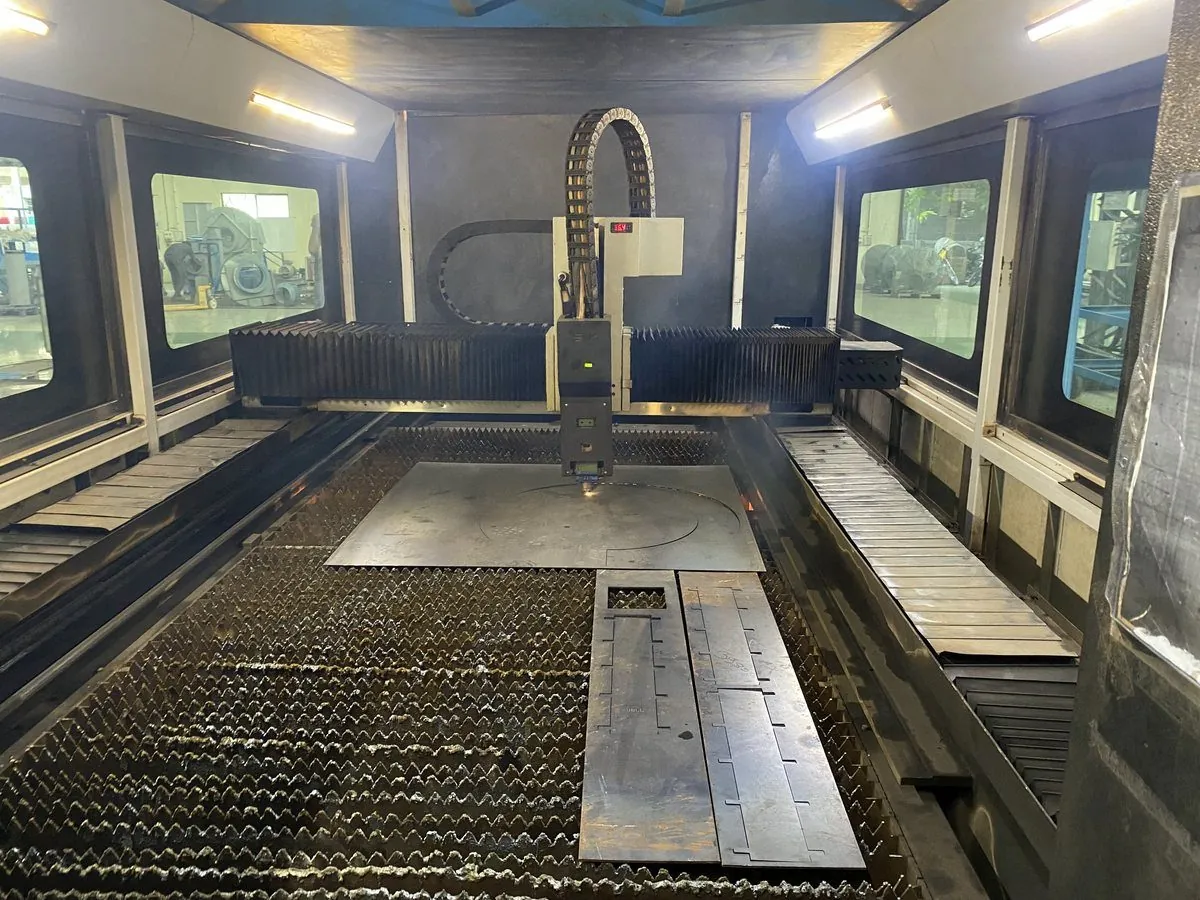
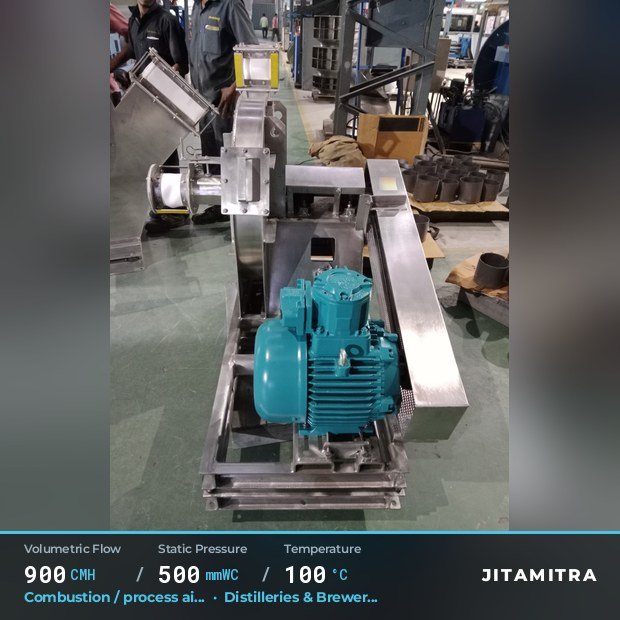
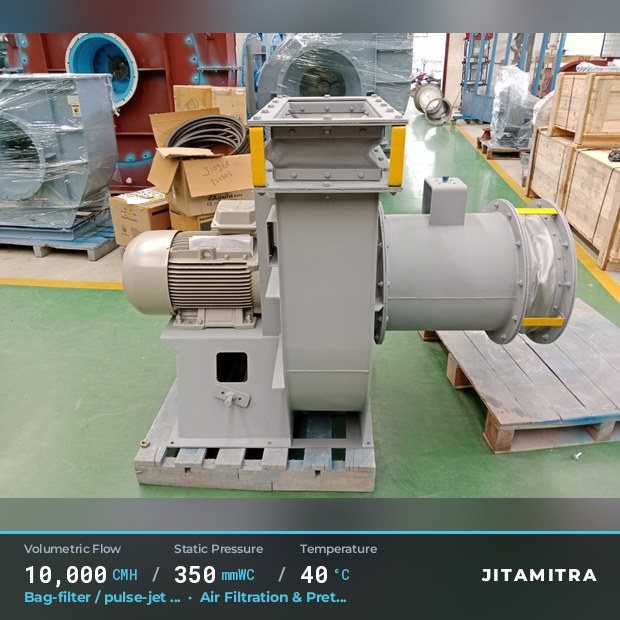
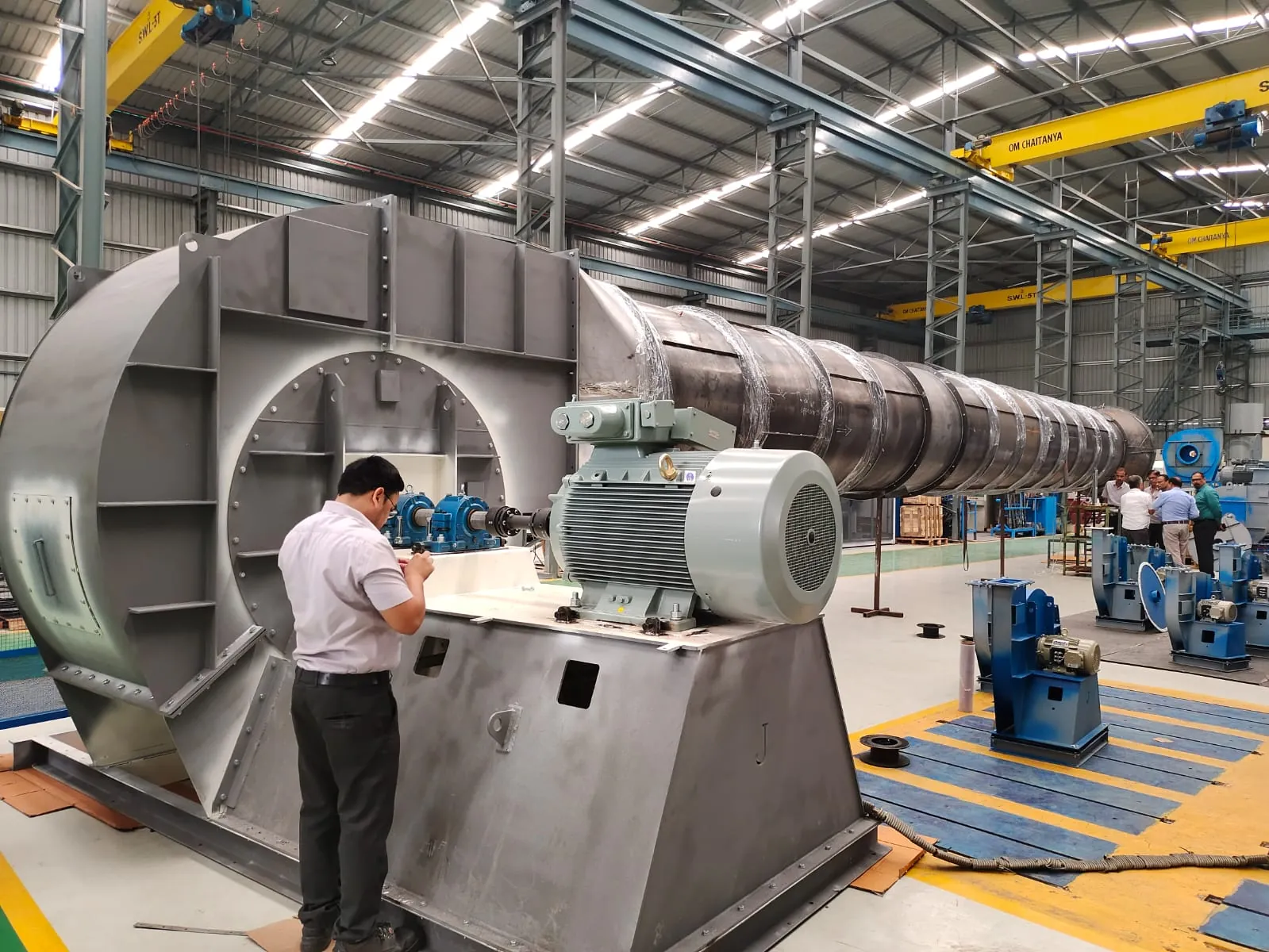
Shop or field repair and overhaul of any make of fan: shaft, bearings, housing, NDT crack checks, re-balance.
Standard/method. ISO 1940 / ISO 21940 (re-balance grades G6.3, G2.5); ISO 14694 (in-situ vibration acceptance limits, mm/s RMS, category BV-3); dye-penetrant NDT used in-house (full UT / MT / RX menu vendor-routed). Where API-class documentation is required it follows API 673 balance and inspection expectations.
Armour the surfaces that erode first — impeller blades, backplates and casing scroll/inlet — with our in-house FCAW chromium-carbide weld overlay at 55-60 HRC, or with carbide cladding, ceramic/rubber lining and replaceable wear plates matched to the duty. Blades are resurfaced or replaced past 20% wear, and any rotor work is re-balanced to ISO 21940 (G6.3/G2.5) before return. Available on any make.
Standard/method. ISO 1940 / ISO 21940 (re-balance after rotor work, G6.3 general / G2.5 critical). Hardfacing hardness benchmarked to industry overlay practice (house 55-60 HRC; industry 55-65 HRC). No accredited weld-procedure certification is claimed beyond the house FCAW practice - quoted on enquiry.
Reverse-engineer, redesign and supply a drop-in replacement impeller for a fan of any make.
Standard/method. ISO 1940 / ISO 21940 (balance quality grades G6.3, G2.5 for the new rotor); material selection cross-referenced to airstream corrosion / abrasion practice. Where the wheel feeds an API-class fan, balance to G2.5 per API 673 / ISO 21940.
Survey the installed fan and its system, then re-engineer the impeller and internals to a new duty — more flow, pressure or efficiency — while reusing the existing casing and foundation. We add the AMCA 201 system-effect factor before re-rating, target the operating point near best efficiency, and balance the new rotor to ISO 21940 (G6.3/G2.5) against an AMCA 210 / ISO 5801 basis. Available on any make.
Standard/method. AMCA 201 (Fans and Systems - system-effect factors applied before re-rating); ISO 1940 / ISO 21940 (re-balance the new rotor to G6.3 general, G2.5 critical); AMCA 210 / ISO 5801 (performance basis for the re-rated duty). Density-correction and fan-law basis per standard-air reference. Where field verification is provided, it follows AMCA 203 / ISO 5802 field-test method.
Inspect the fan against hard failure criteria — 20% blade erosion, hub/root cracks, bearing and casing condition, duty drift — then lay out costed repair, retrofit and replacement options side by side, each with expected downtime and payback. You get a documented, decision-framed report grounded in the same selection and maintenance engineering we use to service fans, not a sales pitch. Make-independent.
Standard/method. Recommendations reference the same standards as the follow-on work: ISO 21940 / 1940-1 balance grades, ISO 14694 vibration acceptance, AMCA 210 / ISO 5801 performance basis, and Jitamitra's maintenance manual wear / replacement criteria. No certification is implied by the advisory itself.
Put our fan machine-shop and fabrication floor to work on your non-fan parts — shaft salvage and re-machining, general turning, boring, milling and steel fabrication — quoted as a standalone third-party job. Rotating parts can be supplied balanced to ISO 21940 (G6.3/G2.5) where required, machined to your drawing tolerances. Offered against genuine spare capacity, so we confirm a realistic date with each quote.
Standard/method. ISO 21940 balance grades (G6.3 / G2.5) apply where a machined rotating part must be supplied balanced. General machining tolerances are per customer drawing. No fan-specific certification applies to non-fan job-shop work - engineered to drawing / on enquiry.
Supply the wearing and replacement parts of a centrifugal fan — impellers, shafts, bearings, inlet cones — for any make of fan, not only ours, identified from the nameplate and drawings or by reverse-engineering the worn part when no drawing exists. Replacement impellers are balanced to ISO 21940 (G6.3 general, G2.5 for API / critical service) before dispatch, and we build you a recommended-spares list so a breakdown becomes a shelf swap, not weeks of downtime. One source for a mixed fleet, obsolete and orphaned fans included.
Standard/method. ISO 21940 / 1940-1 balance quality grades for replacement impellers (G6.3 general, G2.5 API / critical). Bearing replacement and lubrication practice per Jitamitra's maintenance manual. No further external certification is implied by parts supply itself.
Wear parts and components put right, the fan proven on-spec.
~27,000 CMH class
Single-visit field service
~2,700 CMH · 1,170 mmWC · 30 HP
Coupling repair — machined to spec
Hot-air dryer blower
Component replacement & fitment
Oven-circulation blowers
Bearing root-cause — any make


Repair and retrofit work on any make is done on site or at our works. These are the belts our engineers attend, in the three tiers we work to.
Belts our service engineers are in routinely. Site attendance here is ordinary work, planned around your shutdown.
Thane · Bhiwandi · Navi Mumbai · Taloja · Pune · Chakan · Pimpri · Ranjangaon · Silvassa · Vapi · Nashik · Satara · Ahilyanagar · Surat · Hazira · Chhatrapati Sambhajinagar · Bharuch · Ankleshwar · Dahej · Kolhapur · Sangli · Bhavnagar · Jalgaon · Solapur · Vadodara · Belagavi · Rajkot · Goa · Ahmedabad · Sanand · Morbi · Hubballi · Dharwad · Jamnagar
Centres we travel to for site work. We schedule the visit with you rather than promising an engineer the same week.
Mehsana · Indore · Pithampur · Ratlam · Gandhidham · Mundra · Dewas · Udaipur · Hyderabad · Bhopal · Nagpur · Mangaluru · Bhilwara · Kota · Ajmer · Bengaluru · Jabalpur · Hosur · Jaipur · Raipur · Bhilai · Gwalior · Malanpur · Coimbatore
We attend on request. Tell us the machine and the window, and we come back with a dated plan before anyone travels.
Chennai · Sriperumbudur · Agra · Neemrana · Bhiwadi · Visakhapatnam · Kanpur · Gurugram · Manesar · Faridabad · Delhi · Noida · Madurai · Rourkela · Ludhiana · Jamshedpur
Breakdown response and what to have ready · Aftermarket & repair — any make · Talk to the desk
Flow, static, gas temperature, application — or attach a spec, GA drawing or a multi-fan schedule. Engineer to engineer.
ISO 9001:2015 quality system · performance-tested to IS 4894 / ISO 5801 / AMCA 210 method · witnessed FAT on request.
*For our standard range. ATEX and special projects need 5 to 7 working days.
Free field guides from our service engineers — for fans of any make.
This site sets no cookies of its own. Google Analytics loads only if you accept. It sets two cookies, so we can see which fan topics people actually read. Decline and no analytics loads — the site works exactly the same. What we collect →