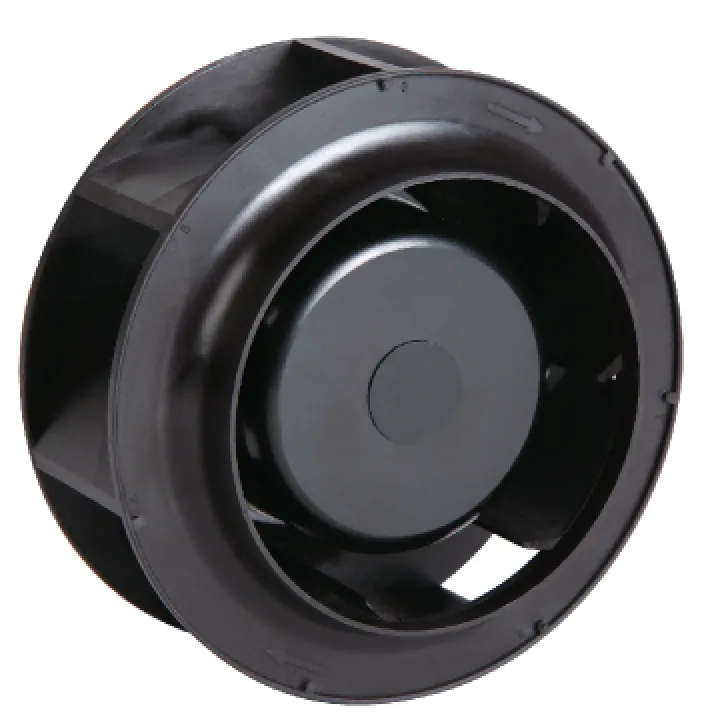
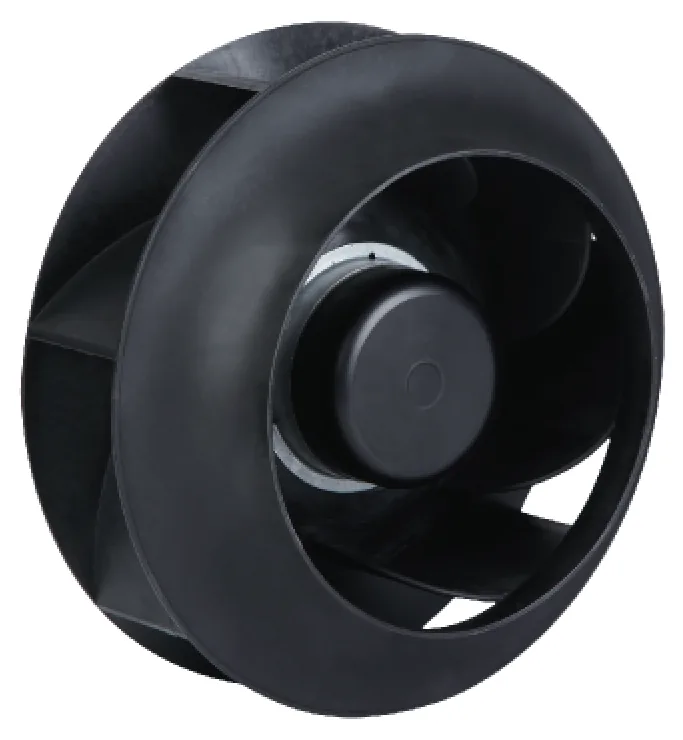
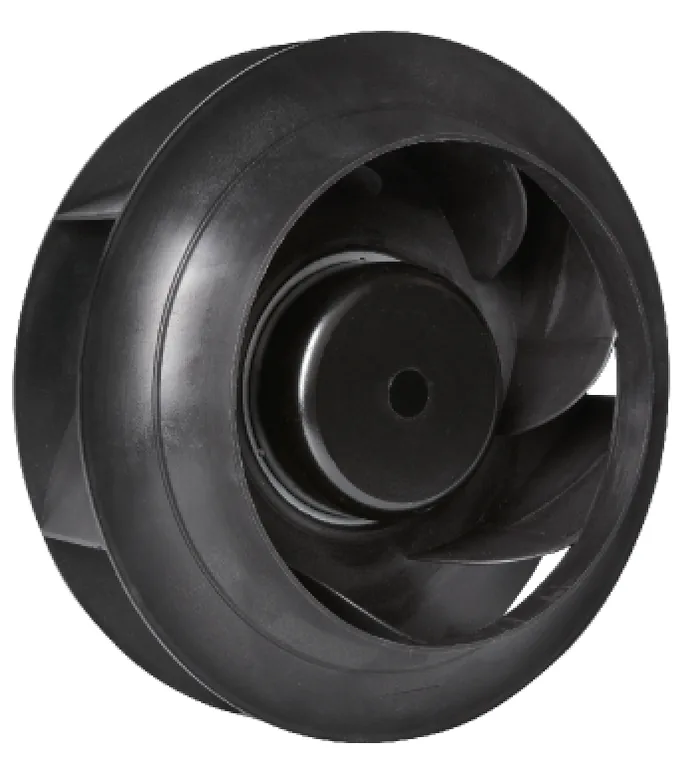
Fan assembly on the Jitamitra shop floor at MIDC Ahilyanagar
Home  /  Products  /  EC Fans
Products

EC fans — the drive is already inside the fan.

An air handling unit or a paint-booth supply fan almost never runs at its design duty. It spends its life throttled — and a damper does not save you a rupee, it just burns the energy somewhere else. An EC fan solves that at the motor: a brushless permanent-magnet machine with the speed controller built in, stepless from a 0–10 V or PWM signal, with no drive panel, no belt and no pulley alignment. Jitamitra is the exclusive authorised distributor in India for JUPI AirTech EC backward-curved centrifugal fans — and we engineer, supply, install and service them from Ahilyanagar.

Ø133–630impeller range
0–10 V / PWMstepless control
40,000 hL10 bearing life, min
0belts, 0 drive panels
3,055–23,515
m³/h · sample range, free air
1,832 Pa
max static · sample range
IP54
Class F · G4.0 balance
3
working days to quote*
ELECTRONICALLY COMMUTATED · BACKWARD-CURVED · DIRECT DRIVE · STEPLESS CONTROL · CLEAN AIR ONLY
The basics

What an EC fan actually is

Three things change. Everything else about selecting and installing the fan stays exactly as you already know it.

The motor carries its own field

An induction motor has to induce the rotor field, and burns real power doing it. A permanent-magnet rotor does not. There is no slip and no rotor excitation loss — which is why the efficiency gap widens as you throttle back rather than closing.

The drive is inside the fan

No separate variable-frequency panel to buy, wire, find space for, cool or maintain. No long motor cable. Speed comes from a simple 0–10 V or PWM signal, stepless across the range, and higher lines add Modbus or BACnet so the fan becomes a BMS endpoint instead of a dumb load.

The wheel is the one you know

It is a backward-curved centrifugal impeller — the same aerodynamic family we have built for years, selected on the same two numbers, off the same P–Q curve. JUPI changed the motor, not the fan. If you can size one of our fans, you can size this.

The commercial argument

Your fan spends its life throttled. That is where the money is.

Between colour changes, flash-off, shift patterns and seasonal load, a booth or AHU fan rarely sits at design flow. There are three ways to give it less air, and they cost wildly different amounts.

  • 01
    Close a damper

    Power barely falls. You are throttling against the fan and paying for the pressure you just destroyed. Still the most common arrangement on older plant.

  • 02
    Inlet guide vanes

    Better. Power comes down somewhat. Common on larger legacy units, and a real improvement on a damper — but it is still a mechanical dodge.

  • 03
    Slow the fan down

    Flow falls with speed, pressure with the square, and power with the cube — run at 80% speed and shaft power drops to roughly half. An EC fan does this natively, with nothing bolted on.

And the belt goes away with it

A belt drive quietly loses a few per cent on its own, then stretches, slips, needs tensioning, and eventually snaps at the worst possible moment. Direct drive removes the belt, the pulleys, the alignment, the guard, the spares and the maintenance visit.

In a paint booth or a cleanroom there is a second reason that matters more than the maintenance: belt dust is a product-quality problem, not just a housekeeping one. Taking the belt out of the air path upstream of a surface that has to be flawless is worth something on its own.

One fan becomes several

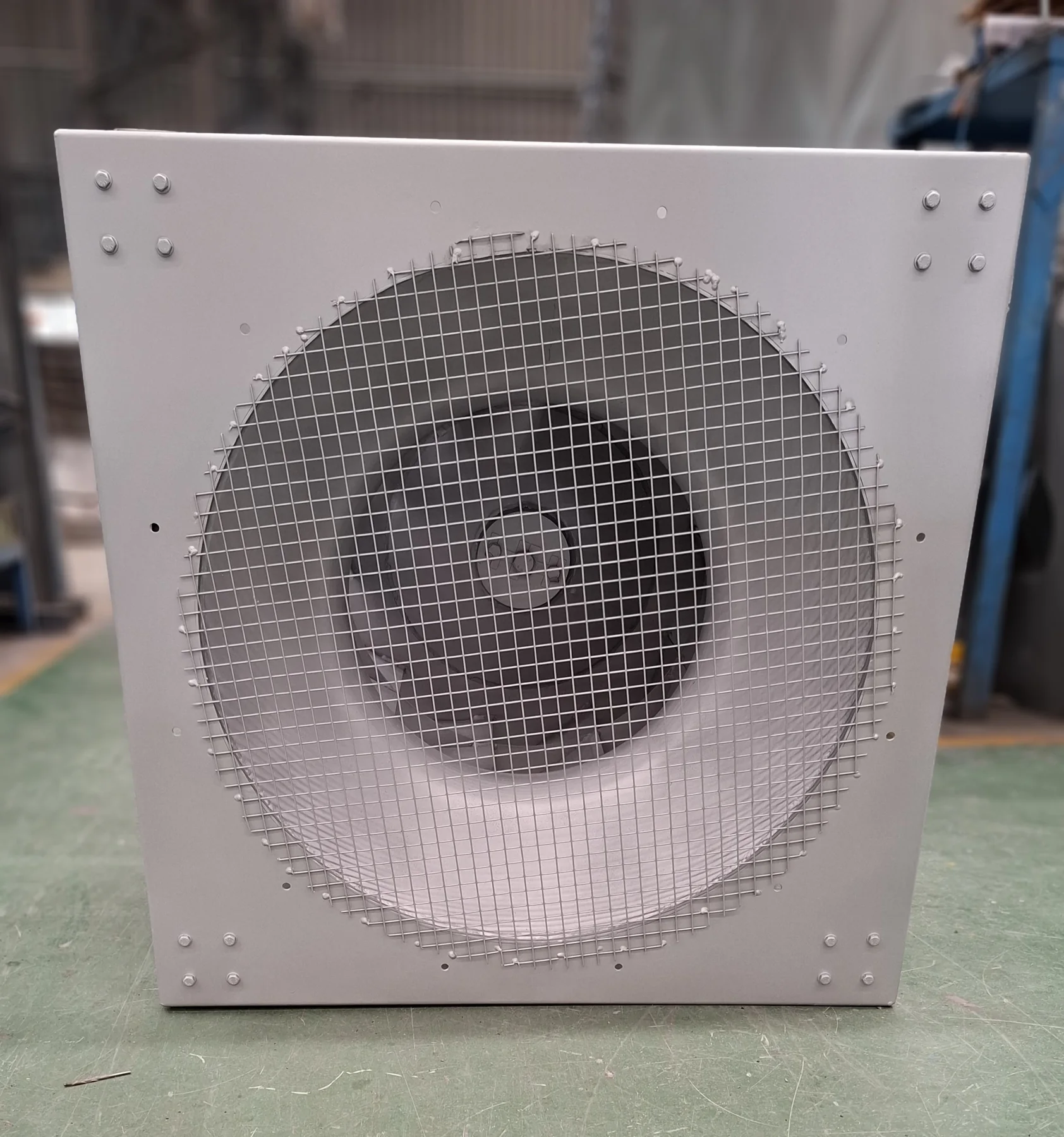
Put four or six small EC fans in the plenum instead of one large one and you get something the original never had: when one stops, the rest keep running. In a paint line the expensive event is not the failed fan — it is the stopped booth. The array also fits through a standard doorway, which is often the only reason a retrofit is possible at all.

The proof

An air handling unit, before and after

A documented retrofit by the manufacturer: one belt-driven AC centrifugal fan replaced with five EC fans in a wall. We are quoting their figures, and we are quoting them in full — including the part most people leave out.

Before

One belt-driven AC centrifugal fan moving 26,600 m³/h and drawing 18.8 kW. No intelligent control, and an installation the manufacturer describes as complicated.

After

Five EC high-static-pressure fans in a wall, moving 39,600 m³/h for 11 kW. Stepless control, straightforward installation, and redundancy built into the arrangement.

−41.5%
input power
+49%
airflow, at the same time
−61%
energy per unit of air moved
0
belts remaining

The manufacturer headlines this as a 41.5% energy saving. That is the fall in absolute power — but the airflow rose 49% at the same time, so it is not a like-for-like comparison and we are not going to present it as one. The honest number is the better one: measured as energy per cubic metre of air actually moved, the retrofit cut consumption by about 61%, from 0.707 to 0.278 kW per 1,000 m³/h.

The manufacturer also reports an annual electricity saving on a basis of 8,760 running hours at CNY 1/kWh. We will not translate that into a rupee figure for you, because a saving computed on someone else's tariff tells you nothing. Give us your rate and your running hours and we will do the arithmetic with you, on your numbers.

The range

Three lines, one wheel type

All three are backward-curved centrifugal fans with the controller on board. They differ in what they are tuned for: pressure, general air handling, or quiet.

EC backward-curved centrifugal impeller with integrated external-rotor motor

High static pressure

Ø310 · 355 · 400 · 450 · 500 · 560 mm

The paint-booth and high-resistance line. Sheet-aluminium impellers, three-phase, built for systems with real pressure drop — deep filter banks, long duct runs, loaded pre-filters. This is the range behind the retrofit above.

EC backward-curved impeller, general air-handling range

General air handling

Ø250 · 355 · 450 · 560 · 630 mm

The AHU workhorses, and the set we hold as samples. Sheet aluminium, IP54, Class F, G4.0 balance, L10 40,000 h minimum, 0–10 V or PWM in. Covers roughly 3,055 to 23,515 m³/h free air.

EC backward-curved impeller for cleanroom filter and fan units

Cleanroom & low noise

Ø133 to 470 mm · 13 frame sizes

Purpose-built for filter and fan units in pharma, electronics and food. Single-phase 220 V, plastic or aluminium impellers, including two ultra-thin frames for tight ceiling voids. The quietest frames run at 51–54 dB(A).

Sample set held for selection — rated data at full speed
ImpellerSupplyMax airflowMax staticInput powerSound pressure
Ø250220 V 1-ph3,055 m³/h1,096 Pa750 W87 dB(A)
Ø355380 V 3-ph7,440 m³/h1,488 Pa2,300 W91 dB(A)
Ø450380 V 3-ph15,202 m³/h1,832 Pa5,400 W95 dB(A)
Ø560380 V 3-ph20,908 m³/h1,400 Pa5,600 W96 dB(A)
Ø630380 V 3-ph23,515 m³/h1,504 Pa6,900 W87 dB(A)

Maximum airflow is the free-air point and maximum static is the shut-off end of the curve — a fan never delivers both at once. Your duty point sits somewhere on the curve between them, and that is what we select against. These five are tuned to a premium paint-booth specification; we re-select to your actual duty before quoting. Sound pressure is the catalogue maximum, not the level at your operating point.

Take it with you

The full selection chart — all 28 variants

No form, no email address. The complete range with duty data, and the form we use to size a fan. Download and mark them up.

Both are also listed with every other Jitamitra datasheet on Resources & datasheets.

The guide carries the manufacturer’s published catalogue data, reproduced by us as their authorised India distributor. It is for shortlisting — the binding specification is the one on our quotation for your duty.

Straight answer

Where an EC fan is right — and where it is the wrong machine

We would rather lose the enquiry than sell you a fan that fails in your duty. This is the honest split.

Right machine
  • Paint-shop air supply and recirculation units — on the clean side of the filters
  • AHU supply and return, new build or plug-fan retrofit
  • Cleanroom filter and fan units — pharma, electronics, food
  • The clean side of dust collectors and filtration plant
  • Drying, ovens and general ventilation within the temperature rating
  • OEM air handling and cleanroom units built around an embedded fan
  • Anywhere the fan runs at part load for most of its life
Wrong machine — talk to us about our own fans
  • Air above the −25 to +50 °C rating — flue gas, kiln and furnace exhaust
  • Abrasive or heavily dust-laden air — shot blast, foundry, cement, fly ash
  • Corrosive atmospheres — the manufacturer specifically warns against H₂S, SO₂ and NO₂
  • Classified or explosive atmospheres
  • The dirty side of any filter or collector
  • Static pressure beyond roughly 1,832 Pa, or duties needing large single machines

For every one of these we build a purpose-engineered centrifugal fan in our own works — up to 2,00,000 m³/h, 2,000 mmWC and 600 °C. See the fan families →

Before we can quote

What we need from you

Six numbers and one photograph get you a real selection instead of a catalogue page. If you do not have all of them, send what you have and we will work the rest out on a call.

Duty point

Airflow in CMH and static pressure in mmWC or Pa, at the fan.

The fan today

Type, motor rating, belt or direct drive, and whether a VFD is already fitted.

Running pattern

Hours per day, days per year, and how much of that is at reduced flow.

Your tariff

Rupees per unit. Without it there is no payback calculation, only a price.

Clean or dirty side

Filter type, and pressure drop clean and loaded. This decides whether EC is viable at all.

Air temperature

At the fan, and the ambient in the plant room around it.

Control need

Fixed speed, 0–10 V or PWM, or full BMS integration over Modbus or BACnet.

Space and access

Plenum dimensions, the door you have to get it through, and the supply available.

The partnership

Who makes them, and what that means for you

These fans are built by JUPI AirTech — JUPI Air Technology (Nanjing) Ltd — a specialist EC fan and motor manufacturer with a 69-strong technical team covering aerodynamic, electromagnetic, drive and structural design, and its own environmental, electrical and life-test laboratory. They supply cooling fans to leading global energy-storage manufacturers, and they hold ISO 9001, ISO 14001 and ISO 45001 certification.

Jitamitra is their exclusive authorised distributor for EC backward-curved centrifugal fans in India, under authorisation J26D061701IN dated 17 June 2026.

What you are actually buying

You are buying from Jitamitra, not importing from China. We are your supplier of record and your single point of accountability — selection, landed cost, supply, installation, commissioning, spares and field service, all from Ahilyanagar, by the same engineering and service teams that look after the fans we build ourselves.

Fifteen years of building centrifugal fans for Indian plant conditions is what sits behind the selection. The fan is imported. The engineering judgement is not.

Questions

Frequently asked

What is an EC fan?

EC stands for electronically commutated. It is a permanent-magnet brushless DC motor whose commutation is handled by electronics built into the fan itself. You get DC-motor efficiency with an AC-style connection, and the speed drive is already inside the unit - there is no separate VFD panel to buy, wire, house or cool.

How is an EC fan different from an AC fan with a VFD?

Functionally both give you variable speed. The differences are practical. The EC controller sits on the motor, so there is no drive panel, no long motor cable and no separate commissioning step. A permanent-magnet rotor also holds its efficiency far better than an induction motor as you throttle back, which is where a ventilation fan spends most of its life. Where an AC fan with a VFD still wins is very large single duties, hot or abrasive air, and sites where a separately serviceable motor and drive are preferred. We will tell you which one your duty actually wants.

How much energy will an EC fan actually save me?

That depends entirely on your running hours, your tariff and how much of the time your fan runs throttled. We do not publish a payback figure because a number calculated on someone else's tariff is worthless to you. Give us your duty point, your running hours and your electricity rate and we will work the arithmetic through with you.

Where should an EC fan not be used?

Clean air only. These fans are rated for -25 to +50 degrees C and carry aluminium or plastic impellers with an electronics package on board. Hot flue gas, abrasive or heavily dust-laden air, corrosive atmospheres and explosive atmospheres are all the wrong duty. For those we will quote you one of our own heavy-duty centrifugal fans instead.

What sizes and duties are available?

Impellers run from 133 mm to 630 mm across three lines - a high-static-pressure range for paint booths and high-resistance air handling, a general AHU range, and a low-noise cleanroom range for filter and fan units. The sample set we hold covers roughly 3,055 to 23,515 cubic metres per hour with static pressure to about 1,832 Pa. We re-select to your actual duty point before quoting.

Can EC fans be retrofitted into an existing AHU or air supply unit?

Usually yes, and it is often the strongest case. Several small EC fans in an array will go through a standard door where a single large replacement fan cannot be craned in, and the array gives you redundancy the original single fan never had. We survey the plenum, the duty and the access before committing to anything.

Who manufactures these fans?

They are built by JUPI AirTech - JUPI Air Technology (Nanjing) Ltd. Jitamitra is their exclusive authorised distributor for EC backward-curved centrifugal fans in India, under authorisation J26D061701IN dated 17 June 2026. Jitamitra is your supplier of record: we select, quote, supply, install, commission and service.

Do you support the fan after it is installed?

Yes. That is the point of buying it from us rather than importing it. Selection, landed cost, installation, commissioning and field service all sit with our own engineering and service teams at Ahilyanagar.

Ready to size one?

Send us the duty point.

Airflow, static pressure, running hours and your tariff. We will come back with a selection, a landed price and the payback worked on your own numbers — normally within three working days.*

Get a quote Talk to engineering

Jitamitra Help Desk +91 83291 72325 · sales@jitamitrablowers.com
*For our standard range.