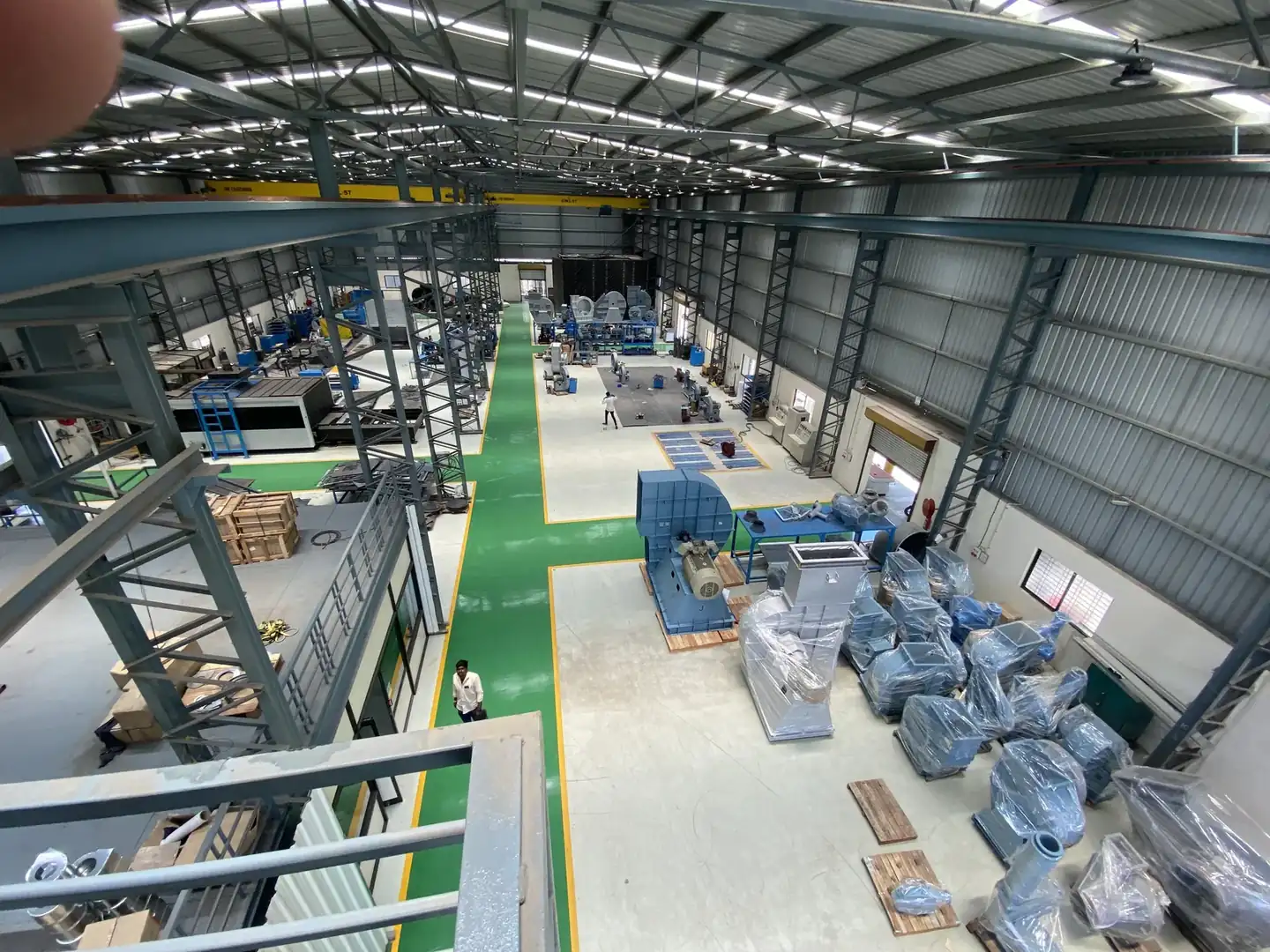
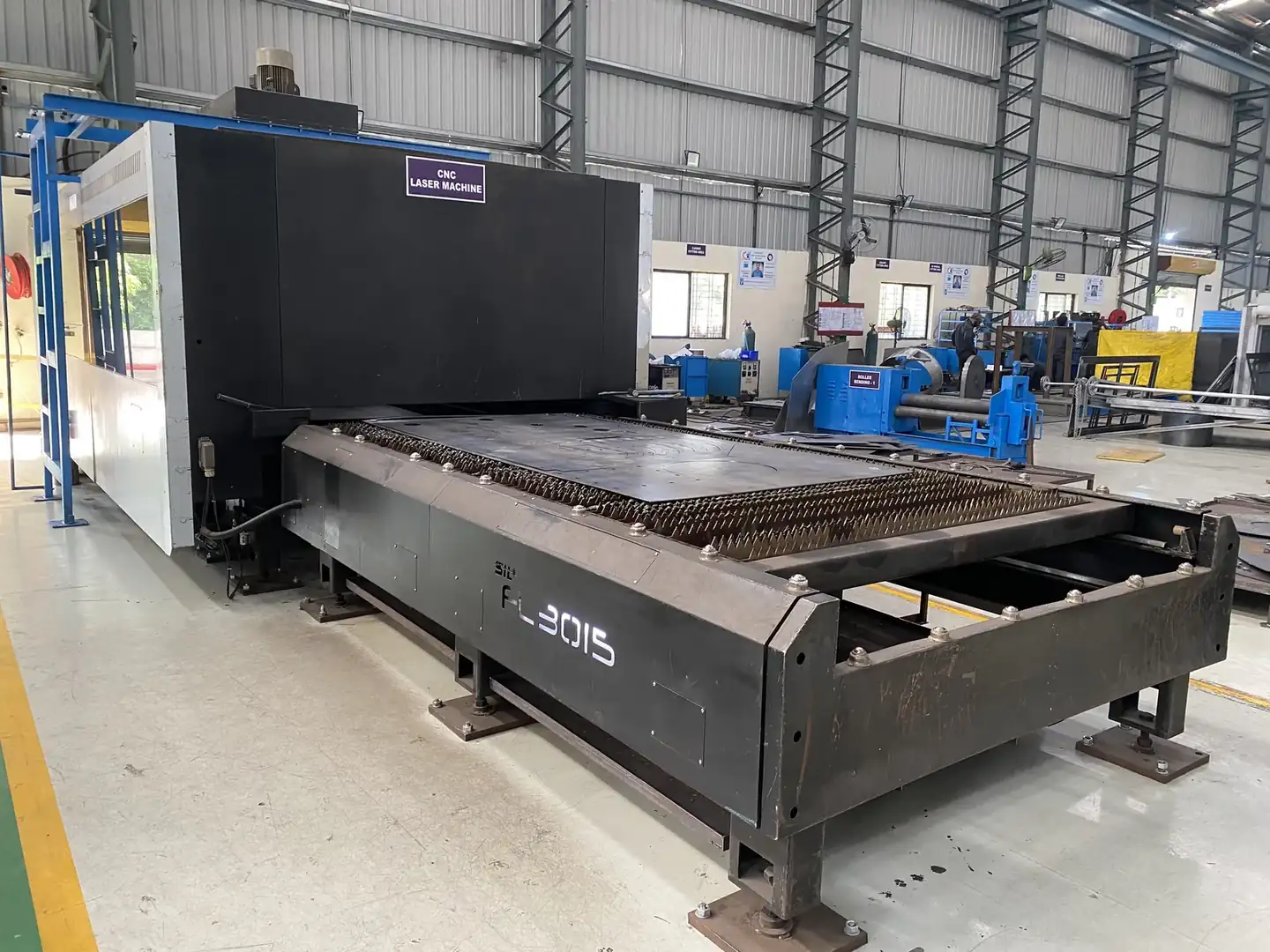
Corrosion-resistant centrifugal exhaust fan for a plating line on the Jitamitra shop floor
Home  /  Industries  /  Surface Coating & Plating
Industries

Fans for surface coating & plating lines — where the air itself is corrosive.

A finishing shop runs a different kind of fan duty: the gas is not hot and dirty, it is wet, acidic and often flammable. Plating tanks and pickling lines throw off hydrochloric, sulphuric, chromic and nitric acid mist; paint and powder-coat booths carry solvent vapour that has to move as an ATEX duty; and the scrubber that catches all of it needs its own booster. Miss the metallurgy and the fan corrodes through in a season. We build the fans across the whole finishing line, matched to the acid and the area classification: 14 executed surface-coating & plating duties, across the full envelope below — up to 2,00,000 CMH, 2,000 mmWC, 400 HP and 600 °C.

14executed coating & plating duties
ATEX 2/22self-declared, booth duty
FRP / 316Lacid-wetted metallurgy
2,000 mmWCmax static
15,000+
fans built since 2011
200 HP
VFD test rig · IS 4894 / AMCA 210
99%
on-time delivery
3
working days to quote — always
ACID-FUME EXHAUST · BOOTH EXHAUST (ATEX) · SCRUBBER VENT · LEV · GENERAL VENT
Where the fans sit

One finishing line, three jobs the fans have to do — and every one is corrosive or flammable.

Across a plating and coating shop the fans do three distinct jobs: they pull acid mist off the tanks and pickling lines, they exhaust solvent-laden booth air as an ATEX duty, and they boost the wet scrubber that neutralises the whole stream before it reaches the stack. None of it is ordinary air — it is either acid-wet or flammable, and the wrong material or the wrong spark rating takes the fan out fast.

The duties we run on a finishing line

The fan duties across a coating & plating shop — and the role each one plays.

A single finishing line needs a family of fan duties, from the acid-wet tank exhaust to the flammable booth vent to the scrubber booster. We have executed 14 surface-coating & plating duties across this list — each engineered to its own acid chemistry, saturation and area classification, not adapted from a catalogue near-fit.

The fans we deploy here

Three fan types cover the finishing line — matched to the acid, the vapour and the pressure.

The wheel is chosen by the duty, not the dust: a backward-curved plate wheel for clean, higher-pressure booth and scrubber-booster air, an aerofoil where efficiency and low noise matter on general and LEV ventilation, and a rugged radial where wet solids or heavier scrubber carry-over are in the stream. All three build across the same envelope — to 2,00,000 CMH, 2,000 mmWC, 400 HP and 600 °C — and all three carry the acid metallurgy and ATEX build the finishing line needs.

Why finishing fan duty is hard

Three things in coating & plating air decide whether the fan lasts years or a single season.

Coating and plating air attacks a fan in three ways that hot-gas industries never see — a saturated acid aerosol that corrodes wetted metal fast, a solvent vapour that can ignite, and a build-up of paint or salt that unbalances the wheel. Engineer for all three and the fan runs 8–10+ years. Engineer for the flow alone and it corrodes through, sparks, or shakes itself apart within 6–18 months.

01 — CORROSION

Aggressive acid corrosion

Plating and pickling exhaust is a saturated acid aerosol — hydrochloric, sulphuric, chromic or nitric — at or below the dew point, so it condenses on every wetted surface. Bare or even 304 stainless pits and perforates, and the wheel corrodes out of balance in a single 6–12-month season.

How we engineer it out

Metallurgy sized to the exact acid: FRP / PP for chloride and mixed-acid streams, 316L or higher alloy for others; fully coated or lined internals with no bare steel in the airstream; a drain at the volute low point and a wash-down connection so condensate never pools.

02 — IGNITION

Flammable solvent vapour

Paint-booth and dip-coat exhaust can carry solvent vapour inside the flammable range, and a spark from a rubbing wheel, a static discharge or a swallowed tramp part is an ignition source in a duct full of fuel and air.

How we engineer it out

ATEX Zone 2/22 self-declared construction per 2014/34/EU Category 3 — spark-resistant AMCA Type B/C rubbing-clearance build, non-sparking wheel-to-inlet materials, the whole assembly bonded and earthed, with motor rating matched to the classified zone.

03 — BUILD-UP

Paint & salt build-up

Overspray paint solids and crystallised plating salts deposit on the wheel and casing; the build is uneven, so the rotor slowly goes out of balance and the vibration climbs until a blade or a seal fails.

How we engineer it out

A non-stick coated wheel and casing so deposit sheds rather than keys on; access and cleanout doors and a wash-down spray for in-place cleaning; and balance held to ISO 21940 G6.3 with margin so the fan tolerates the build between wash cycles.

How we design for the line

Every metallurgy, coating and spark-rating choice is documented on the GA drawing you sign off — before we cut metal.

We don't sell a catalogue near-fit onto a finishing line. Each fan is engineered to its own duty — the acid-fume exhaust to its chemistry, the booth fan to its area classification, the scrubber booster to its resistance — at your operating point.

  • Acid-wetted metallurgy — Material sized to your exact bath chemistry — FRP or PP for hydrochloric and mixed-acid streams, 316L or higher alloy where the acid allows — with fully coated or lined internals, no bare steel in the airstream, a volute drain and a wash-down connection so condensate never sits.
  • ATEX booth construction — ATEX Zone 2/22 self-declared per 2014/34/EU Category 3 for solvent-laden booth exhaust — spark-resistant AMCA Type B/C rubbing-clearance build, non-sparking wetted materials, the assembly bonded and earthed, and the motor rated to the classified zone.
  • Anti-build, cleanable design — A non-stick coated wheel and casing so paint overspray and plating salt shed rather than key on; access and cleanout doors and an optional wash-down spray for in-place cleaning; balance held to ISO 21940 G6.3 with margin so the fan runs true between wash cycles.
  • Single source across the line — One engineering partner for the whole finishing line — acid-fume exhaust, booth exhaust, LEV, general ventilation and the scrubber booster — with 14 executed surface-coating & plating duties, so the fans, materials and spark ratings carry one convention across the shop.
Standards & conformity

Stated precisely — because procurement checks.

What our marks mean, in the words that survive an audit.

Performance

Tested to the AMCA 210 / ISO 5801 method, in-house on our 200 HP VFD rig. Tested-to-method — not AMCA-certified.

Quality system

ISO 9001:2015 — third-party certified. Our only third-party certification.

CE conformity

Self-declared per 2006/42/EC + 2014/35/EU (Module A). A self-declaration, not a notified-body certificate.

ATEX conformity

Self-declared, Zone 2/22, Category 3, per 2014/34/EU, where the area classification calls for it.

Oil & gas duty

Designed and built to API 673 as project-specific scope.

Welding

ASME Sec IX qualified welders + WPS for every joint.

Balance

ISO 21940 — G6.3 minimum, G2.5 / G1.0 on application.

Vibration

ISO 20816 evaluation; ISO 14694 for fan-specific limits.

Questions engineers ask

Surface coating & plating fan questions, answered straight.

Can you supply the fans across the whole finishing line, or only one duty?
Across the whole line. We have executed 14 surface-coating & plating duties spanning plating-line and pickling acid-fume exhaust, paint and powder-coat booth exhaust, prep and grinding fume extraction, local lip and hood extraction, whole-shop general ventilation, and lab fume-hood exhaust. Each fan is engineered to its own acid chemistry and area classification — the acid-fume exhaust and the ATEX booth fan are different machines — but they come from one partner, on one engineering convention across the shop.
Our plating and pickling exhaust is aggressive acid. What materials do you use?
We size the metallurgy to your exact bath chemistry, because the right answer for chloride is wrong for chromic. For hydrochloric and mixed-acid streams we build in FRP or polypropylene; for sulphuric, chromic or nitric where a stainless holds, we use 316L or step up to a higher alloy. Bare mild steel and even 304 pit and perforate on saturated acid, so there is no bare steel in the airstream — internals are fully coated or lined, with a drain at the volute low point and a wash-down connection so condensate never pools. Send your bath chemistry, concentration and saturation and we specify the material to it, not a default.
Our paint booth carries solvent vapour. How do you make the fan ATEX-safe?
Booth and dip-coat exhaust that can sit in the flammable range is built as an ATEX Zone 2/22 duty. That means spark-resistant construction to the AMCA Type B/C rubbing-clearance approach, non-sparking materials where the wheel could contact the inlet, the whole assembly bonded and earthed against static, and a motor rated to the classified zone. To be precise: ATEX Zone 2/22 is self-declared per 2014/34/EU (Category 3) — it is a self-declaration of conformity, not a third-party certification. Tell us the zone and the solvent and we build the fan to that classification.
Paint overspray and plating salt build up on the wheel. Does that throw the fan out of balance?
It can, and it is a real failure mode on this duty — the build is uneven, so the rotor slowly loses balance until vibration climbs and a blade or seal fails. We design against it: a non-stick coated wheel and casing so the deposit sheds rather than keys on, access and cleanout doors and an optional wash-down spray so it can be cleaned in place, and balance held to ISO 21940 G6.3 with margin so the fan tolerates the build between wash cycles. Cleanable-by-design, not sealed shut.
Can you build a replacement to match our existing exhaust fan's duty and footprint?
Yes. We reverse-engineer to the existing duty point (flow, static pressure, gas condition, saturation and acid chemistry), bearing centres, inlet/outlet orientation and foundation bolt pattern so the unit drops onto the existing base and ducting — whether it is an acid-fume exhaust, a booth fan, a scrubber booster or an LEV fan. Made to your installation, not a nearest-catalogue substitute. Send the old GA, the nameplate and a curve if you have one, and we match it.
Do you performance-test the fans, and what about AMCA, CE, ATEX and quality certification?
Every fan is performance-tested in-house to the AMCA 210 / ISO 5801 method on our 200 HP VFD test rig, and dynamically balanced to ISO 21940 G6.3 as standard (G2.5 / G1.0 on application). To be precise: that in-house testing is to the AMCA 210 / ISO 5801 method, not AMCA-certified; CE is self-declared per 2006/42/EC and 2014/35/EU, and ATEX Zone 2/22 is self-declared per 2014/34/EU (Category 3) where the booth or vapour area classification calls for it — those are self-declarations of conformity, not third-party certifications. Our only third-party certification is ISO 9001:2015.

Across the range

Where Surface Coating & Plating fits — the fans we deploy, the duties we run, and adjacent industries.

The same engineering, viewed three ways — by fan family, by duty, and by industry. Follow the cross-references.

Take it further

Specs an engineer can use — not a brochure.

Engineer to engineer

Send us the duty point.
We'll quote in 3 working days — always.

No model numbers needed. Give us the operating conditions — flow, static, gas temperature, composition, particulate, and any tender standard — and our application engineers size the fan and quote it. Attach a spec or GA if you have one.

+91 90110 09155  ·  mihir.jitamitra@gmail.com