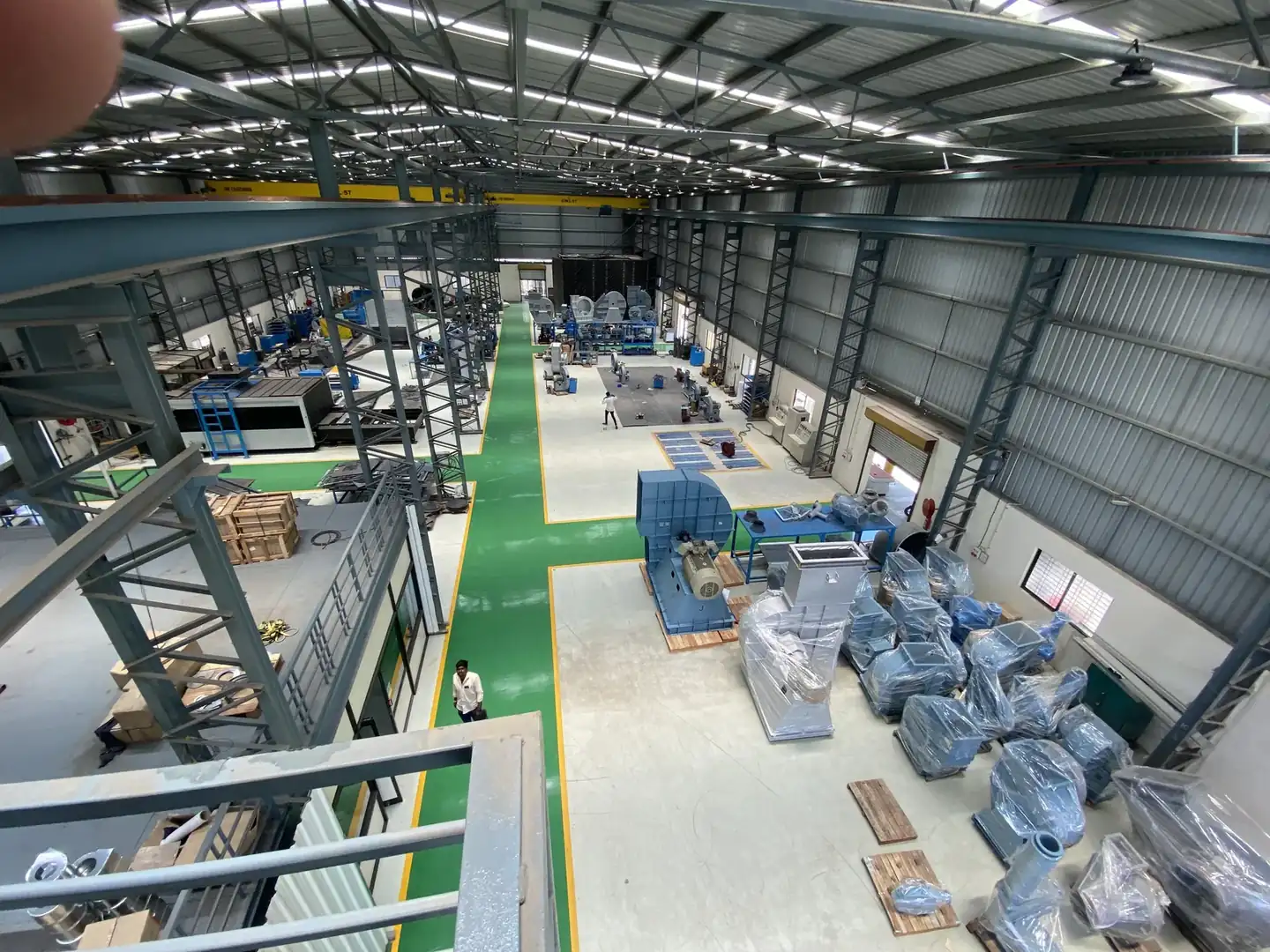
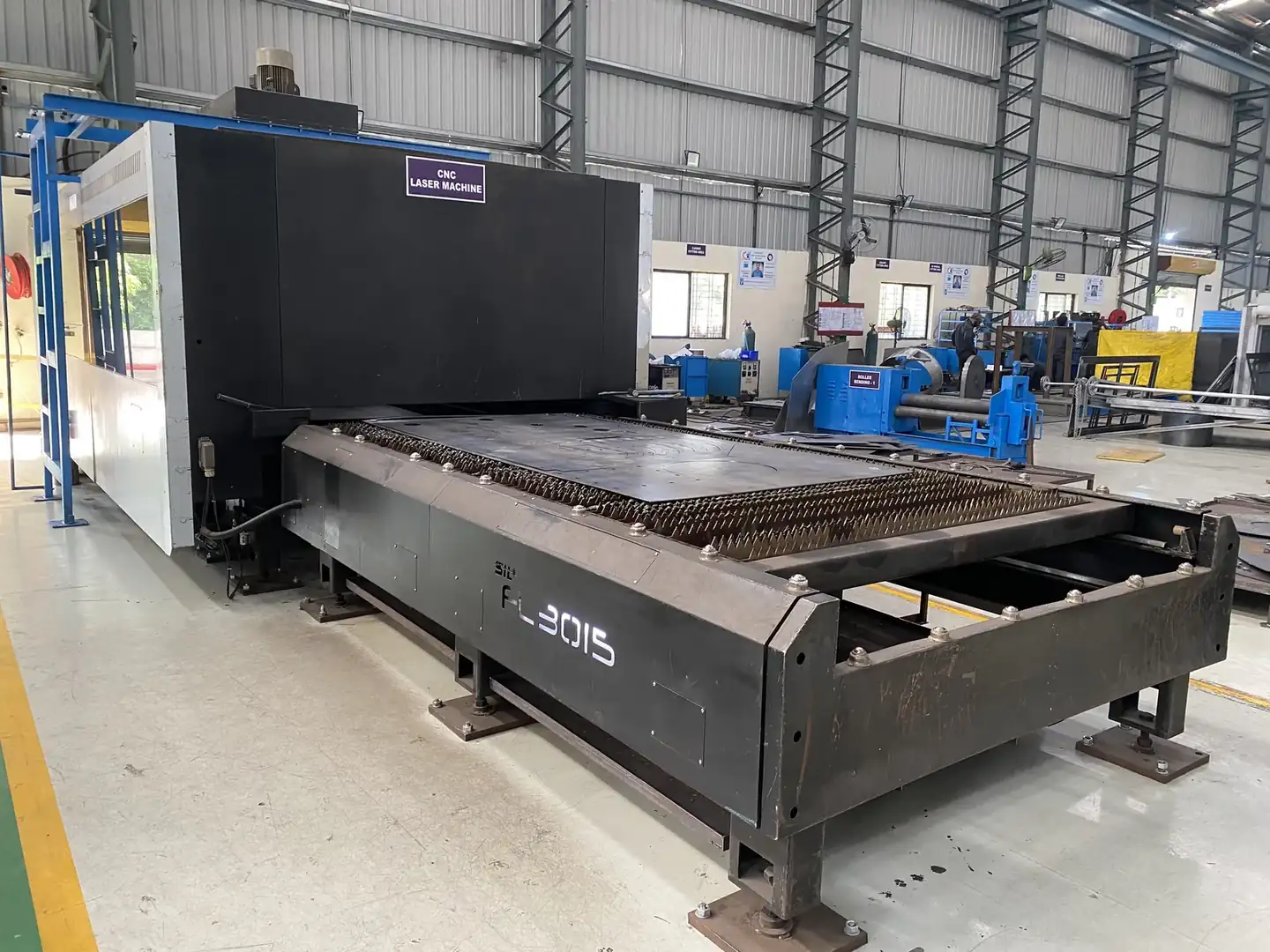
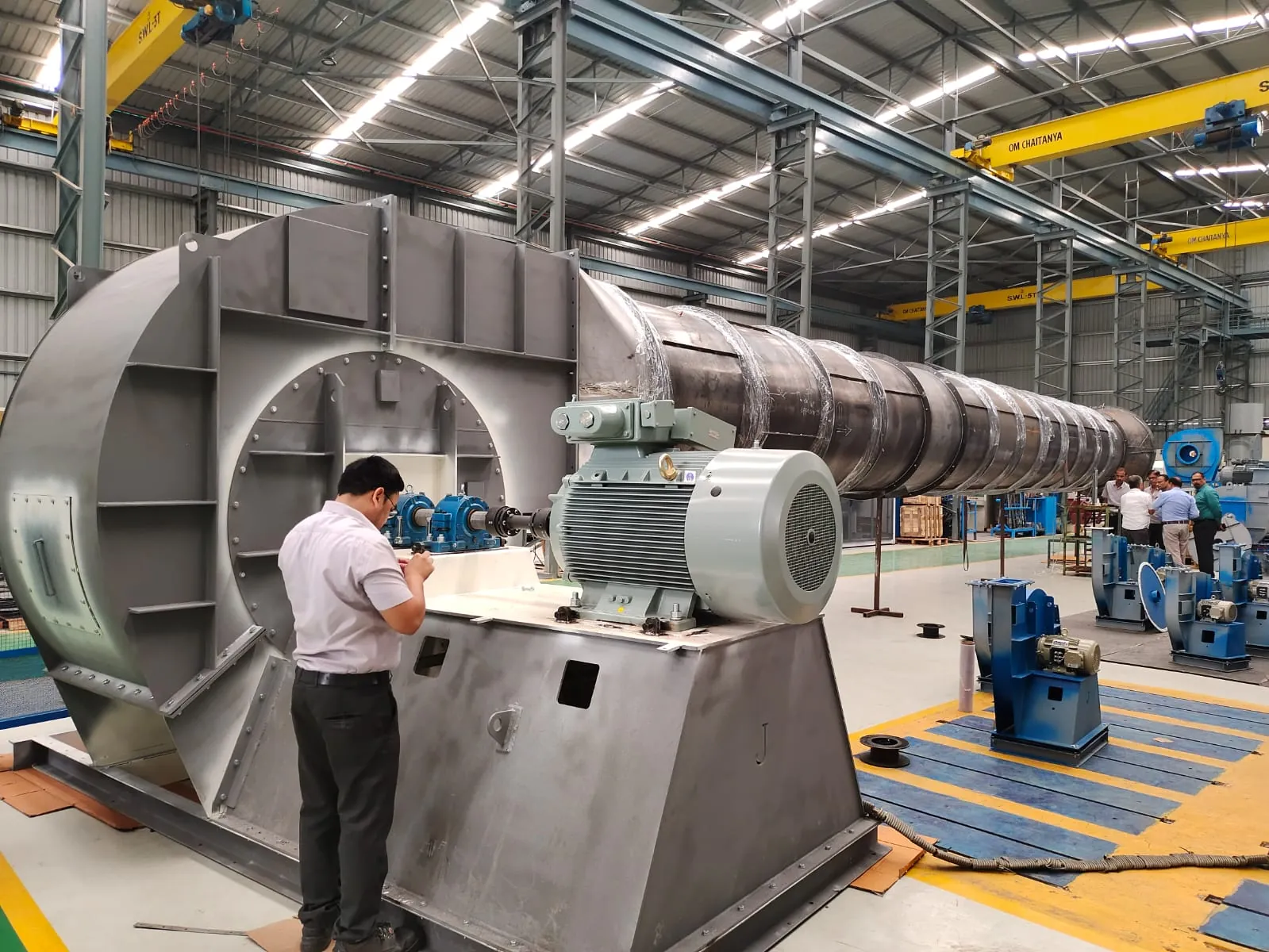
Centrifugal LEV fan with backward-curved impeller on the Jitamitra shop floor
Home  /  Applications  /  Local exhaust ventilation (LEV)
Applications

Local exhaust ventilation fans — catch the contaminant at source, before the breathing zone.

An LEV fan is the engine of a hood-and-duct system: it holds the capture velocity at every hood face so contaminant is drawn away at the source, not left to drift into the operator's breathing zone. The duty is usually moderate flow and moderate-to-high static — the pressure is spent on branch dampers, hoods and the collector, not on gas density. What is hard is holding capture velocity constant as hoods open and close across the run, and staying spark-resistant where the captured dust or vapour is combustible. We build LEV fans across the full envelope below — up to 2,00,000 CMH, 2,000 mmWC and 400 HP. Executed across 7 customer duties and counting.

2,00,000CMH max flow
2,000mmWC max static
Zone 22ATEX self-declared
400 HPdrive power
15,000+
fans built since 2011
200 HP
VFD test rig · IS 4894 / AMCA 210
99%
on-time delivery
3
working days to quote — always
AT THE HOOD · CAPTURE VELOCITY · THROUGH THE BRANCHES · OUT OF THE BREATHING ZONE
What it does

The whole point is one number at the hood face — capture velocity.

A local-exhaust-ventilation fan drives a source-capture system: it pulls contaminant off the process at the hood, holds every branch and the collector under negative pressure, and delivers the cleaned air to the stack. Everything hangs on holding the design capture velocity at each hood — the air speed that overcomes the contaminant's own momentum and room cross-draughts and pulls it into the duct instead of past the operator.

  • 01
    Capture

    Hold the capture velocity at the hood face — typically 0.5–1.0 m/s for still-air release, 2.5–10 m/s for active generation like grinding or spraying. Fall below it and contaminant escapes into the breathing zone; that is the whole failure the fan exists to prevent.

  • 02
    Balance

    Move the design air through a branched duct where hoods open and close. Each blast-gate or auto-damper that shuts shifts the system resistance and re-splits the flow — the fan has to hold total flow without starving the hoods still in use, typically to ±10% of design at each branch.

  • 03
    Deliver clean

    Push the captured air through the collector and out — clean vapour or filtered air on the common position, with wear rarely a factor. The engineering shifts to curve stability, spark resistance where the contaminant is combustible, and noise near the occupied floor.

INDUCED-DRAFT CENTRIFUGAL FAN Single-width single-inlet — scroll cut away to reveal the impeller inlet expansion joint MOTOR IE3 / VFD GAS IN GAS OUT n 1 2 3 4 5 6 7 8 9 10 1 Inlet cone (bell-mouth) 2 Backward-curved / radial-tipped impeller 3 Spiral volute casing 4 Replaceable AR wear plates (volute throat) 5 Shaft 6 Plummer-block bearings (L10 ≥ 40,000 h) 7 Shaft cooling disc (>400 °C duty) 8 Pedestal / base frame 9 Drive — motor + coupling 10 Outlet flange + duct take-off
Fig. 1LEV centrifugal fan — single-width single-inlet, scroll cut away to reveal the backward-curved impeller. Numbered components keyed below the drawing.
Why it is hard

Capture velocity, a moving branched system, and a combustible contaminant — three things decide whether LEV actually protects the operator.

Moving air is not the hard part; holding the right air at the hood is. Capture velocity that drops even 20% lets fume slip past the operator, and a branched LEV run re-splits its flow every time a blast-gate opens or closes. Where the captured stream is combustible dust or solvent vapour, the fan itself is an ignition risk. Size the fan to the real, moving system, and the LEV keeps the breathing zone clear across every shift; size it to a single fixed point, and it protects nobody the moment a second hood opens.

01 — CAPTURE VELOCITY

Losing capture at the hood face

As the collector loads and duct resistance climbs, a fan sized to a single fixed point loses flow — and capture velocity drops with it. A hood designed for 1 m/s that coasts down to 0.6 m/s stops pulling fume in, and the contaminant drifts into the breathing zone unseen.

How we engineer it out

VFD as default so the fan holds hood capture velocity as filter dP climbs, instead of letting it coast down; sizing that carries the loaded-filter point without hitting a control limit; and a curve on the falling, stable side of the peak so small resistance swings don't collapse the duty point.

02 — BRANCH BALANCE

A branched system that re-splits every time a gate moves

LEV runs are almost never a single hood. Each blast-gate or interlocked auto-damper that opens or shuts changes the total system resistance and re-divides the flow between branches — starving the hoods still in use if the fan can't hold total flow across the swing.

How we engineer it out

We size the fan to span the all-hoods-open and part-open resistance range onto the stable region of the curve, keep at least 15–20% flow margin at the worst case, and default to VFD or a static-pressure-controlled damper so branch flow stays within ±10% of design as gates cycle.

03 — IGNITION

Combustible dust or solvent vapour in the airstream

LEV pulls exactly what you don't want airborne — and on grinding, buffing, woodworking or solvent duty that stream is combustible dust or flammable vapour. A static spark, a hot bearing or metal-on-metal contact inside the fan is an ignition source suspended in the very cloud it is carrying.

How we engineer it out

Spark-resistant (SR) construction per AMCA 99 — Type A / B / C to the risk — with non-sparking rub rings and bonded earthing; ATEX Zone 22 (Cat 3D) or Zone 2 (Cat 3G) self-declared per 2014/34/EU for combustible dust or solvent vapour, with anti-static coatings and T-class bearing-temperature control.

How we design for it

Every choice is documented on the GA drawing you sign off — before we cut metal.

We don't sell a catalogue near-fit. The fan is engineered to your capture-velocity target, hood count and duty cycle, system resistance, area classification and sound limit — made to order, not off a shelf.

  • Capture-velocity control — VFD default so the fan holds hood-face velocity across filter loading and gate cycling; sized to carry the loaded-filter point with 15–20% flow margin. Static-pressure or CO/VOC-sensor control on application where the hood duty is intermittent, so the fan turns down when hoods close and holds capture when they open.
  • Impeller geometry — Backward-curved or backward-inclined for high static efficiency on clean or lightly-loaded LEV air — the common case, since most LEV fans sit downstream of the collector. Radial-tipped only where the fan sits on dirty-side or dust-laden capture ahead of the filter.
  • Spark-resistant & ATEX constructionAMCA 99 Type A / B / C to the ignition risk — Type B (non-ferrous rub ring) the default for grinding and buffing capture; Type A where the combustible-dust or solvent case is severe. ATEX Zone 22 (Cat 3D) for dust or Zone 2 (Cat 3G) for vapour, self-declared per 2014/34/EU, with bonded earthing throughout.
  • Materials & sound — Mild steel + epoxy standard; stainless for corrosive or wash-down capture (plating, chemical fume); FRP construction on aggressive corrosive vapour. Designed to <85 dB(A) @ 1 m as standard, <75 dB(A) with silencers and an acoustic enclosure where the fan sits near the occupied floor.
Engineered to your duty point

We size the fan to hold capture velocity across the moving system — then prove it on the rig.

No catalogue fan forced onto your spec. Your operating point is engineered across the all-hoods-open and part-open resistance range — including the collector's clean-to-loaded pressure drop — onto the falling, stable region of the selected wheel, then verified on the 200 HP VFD test rig before dispatch.

avoid: unstable 0 40,000 80,000 1,20,000 1,60,000 2,00,000 VOLUME FLOW RATE  [ CMH ] 0 500 1000 1500 2000 STATIC PRESSURE  [ mmWC ] 0 25 50 75 100 STATIC EFFICIENCY  [ % ] Fan static pressure System resistance Static efficiency BEP 82% DUTY POINT 1,20,000 CMH · 450 mmWC Fan static pressure System resistance Static efficiency
Fig. 2Representative LEV-fan characteristic — fan static pressure, system resistance (all-hoods-open and part-open) and static efficiency vs. flow, with the duty band engineered onto the falling, stable region right of the peak. Illustrative; every fan is sized to its own duty.
Capability envelope — LEV service

What we can supply, and where it stretches on application.

ParameterStandardOn application
Volume flowup to 2,00,000 CMHhigher on enquiry
Static pressureup to 1,500 mmWCup to 2,000 mmWC for long-duct + high-resistance collector trains
Capture velocity (design)0.5–1.0 m/s still-air; 2.5–10 m/s active generationper hood type + contaminant momentum
Gas / air temperatureambient to 80 °Cup to 200 °C on hot-process capture with special metallurgy
Construction (ignition)AMCA 99 spark-resistant Type B on combustible dutyType A / C + ATEX Zone 22 / Zone 2 (Cat 3) self-declared
Static efficiencyhigh static efficiency standardhigher on high-efficiency backward-curved builds
Drive powerup to 400 HPhigher with custom motor sourcing
Balance qualityISO 21940 G6.3G2.5 / G1.0 on application

The envelope above covers the great majority of LEV duty. Most LEV fans run moderate flow at moderate-to-high static — the pressure is spent on branch dampers, hoods and the collector, not on gas density — and sit downstream of the collector on clean or lightly-loaded air, so wear protection is rarely needed. Where the captured stream is combustible, spark-resistant construction is per AMCA 99 (Type A/B/C), combined with ATEX Zone 22 (Cat 3D) for dust or Zone 2 (Cat 3G) for solvent vapour, self-declared per 2014/34/EU. Bearing life is a design target of L10h ≥ 40,000 h continuous, longer on application. For duty beyond the envelope we engineer to spec and quote on enquiry.

How a Jitamitra LEV fan is specified

Specified, not picked from a shelf.

The same engineering language carries from your enquiry to the GA drawing to the nameplate — expressed in the standard AMCA conventions, with the spark-resistant and ATEX marking alongside where the duty calls for it.

Specification fieldOptions
Arrangement (AMCA 99)Arr. 1 (overhung, fan bearings) / Arr. 4 (direct, motor on base) / Arr. 8 (overhung on common base) / Arr. 9 (overhung, motor side) / Arr. 10 (overhung, motor inside base) — selected by drive, access and mounting position.
Width / inletSWSI (single width, single inlet) default for LEV duty; DWDI (double width, double inlet) for high flow at moderate pressure on large multi-hood capture.
Wheel typeBackward-curved or backward-inclined (default, best efficiency on clean or lightly-loaded LEV air) / radial-tipped self-cleaning (dirty-side or dust-laden capture ahead of the filter).
Class (by pressure / outlet velocity)Class I / II / III selected from the duty point on the pressure-vs-outlet-velocity limits; higher class = heavier construction for higher static and tip speed on high-resistance collector trains.
Spark-resistant construction (AMCA 99)Type A (all non-ferrous parts in the airstream) / Type B (non-ferrous rub ring and non-ferrous parts across the shaft opening) / Type C (aligned construction that prevents ferrous rotating-to-stationary contact) — selected to the ignition risk; Type B is the LEV default on combustible capture.
ATEX scopeZone 22 self-declared (Cat 3D) per 2014/34/EU for combustible dust (grinding, buffing, wood) / Zone 2 (Cat 3G) for solvent vapour — non-sparking impeller, bronze rub rings, bonded earthing, anti-static coatings, T-class bearing control. Higher category on application via a Notified-Body partner.
Materials of constructionMild steel + epoxy coating (standard) / 304 or 316L stainless for corrosive or wash-down capture (plating, chemical fume) / FRP construction for aggressive corrosive vapour / aluminium or bronze non-sparking parts for combustible dust and vapour.
DriveDirect-coupled / V-belt / VFD (default for capture-velocity and branch-balance control). Drive up to 400 HP across the envelope; speed typically 600-1,800 RPM.
Accessories & acoustic scopeVFD or static-pressure-controlled damper for capture-velocity hold; blast-gate / auto-damper interface documented up front; bonded earthing and non-sparking parts on combustible duty; shaft seal and drain on wash-down or condensing capture; inlet and outlet silencers with acoustic-lagged casing and enclosure for <75 dB(A) near occupied floor; inspection doors.
The proof, not the promise

We test before we ship — and you're welcome to witness it.

Every job's performance is verified at our works on the 200 HP VFD test rig, to the AMCA 210 / ISO 5801 method, before dispatch.

  • Customer-witnessed FAT on request — at no extra cost
  • Rotors balanced to ISO 21940 G6.3 as standard (G2.5 / G1.0 on application) before they leave the floor
  • Full NDT in-house — DP, MPI, UT, RT — to what the duty demands
30+ INDUSTRIES · 45 APPLICATION / DUTY TYPES
Where our LEV fans run

Proven where the contaminant has to be caught at the source.

Automotive & Paint

Welding-bench and body-shop capture, sanding and prep-booth LEV, adhesive and sealant fume extraction.

Foundry, Casting & Forging

Grinding-booth and fettling capture, knock-out and sand-handling hoods, tapping and pouring-bay LEV.

Pharmaceuticals

Dispensing-booth and granulation capture, tablet-press and coating-pan LEV, solvent-vapour extraction with ATEX scope.

Surface Coating & Plating

Plating-tank and pickling-line lateral capture, acid-fume LEV in corrosion-resistant construction, powder-coat booth extraction.

General Manufacturing

Grinding, buffing and polishing capture, wood and composite dust hoods, spark-resistant on combustible-dust duty.

Chemicals & Petrochemicals

Charging-port and reactor-vent capture, solvent-vapour LEV with Zone 2 self-declaration, drum-filling hood extraction.

Pollution-control OEMs

LEV fans supplied as a sub-package to hood, ducting and collector integrators — capture-velocity and interface documented up front.

Your process

45 application/duty types engineered. Tell us yours.

Standards & conformity

Stated precisely — because procurement checks.

What our marks mean, in the words that survive an audit.

Performance

Tested to the AMCA 210 / ISO 5801 method, in-house on our 200 HP VFD rig. Tested-to-method — not AMCA-certified.

Quality system

ISO 9001:2015 — third-party certified. Our only third-party certification.

CE conformity

Self-declared per 2006/42/EC + 2014/35/EU (Module A). A self-declaration, not a notified-body certificate.

ATEX conformity

Self-declared, Zone 2/22, Category 3, per 2014/34/EU, where the area classification calls for it.

Oil & gas duty

Designed and built to API 673 as project-specific scope.

Welding

ASME Sec IX qualified welders + WPS for every joint.

Balance

ISO 21940 — G6.3 minimum, G2.5 / G1.0 on application.

Vibration

ISO 20816 evaluation; ISO 14694 for fan-specific limits.

Lead time & process

From enquiry to a tested fan on your dock.

StageStandard dutyAPI-673 / engineered
Offer / quotation3 working days — always7–10 working days
GA drawing for approval2–3 weeks from PO3–4 weeks from PO
Manufacture + balance + paint6–10 weeks10–14 weeks
Performance test + witnessed FAT~1 week1–2 weeks
Order-to-dispatch (total)9–14 weeks14–20 weeks

Shutdown-driven replacements: we have shipped fans within 6 weeks of a clean PO. Tell us your shutdown window and we commit to a dated plan.

Questions engineers ask

The eight we hear most before a PO.

What actually decides whether an LEV fan protects the operator?
Capture velocity at the hood face. That is the air speed which overcomes the contaminant's own momentum and any room cross-draughts and pulls the fume or dust into the duct instead of letting it drift past the operator into the breathing zone. Design values run roughly 0.5 to 1.0 m/s for a contaminant released into still air and 2.5 to 10 m/s where it is actively thrown off, such as grinding or spraying. If the fan loses flow, capture velocity drops with it and the LEV silently stops working. So we size the fan to hold capture velocity across the whole moving system, not just at one fixed point, and default to VFD so it holds that velocity as the collector loads.
My LEV run has many hoods on blast-gates. How do you size for a branched system?
A branched LEV run re-splits its flow every time a blast-gate or interlocked auto-damper opens or closes, which changes both the total system resistance and how the air divides between branches. We size the fan to span the all-hoods-open and worst part-open resistance range onto the stable, falling region of the curve, keep at least 15 to 20 percent flow margin at the worst case, and default to VFD or static-pressure-controlled damper control so each branch stays within about 10 percent of its design flow as gates cycle. Give us the hood schedule and duty cycle, not just a single total, and we engineer to the range the system actually sees.
Our captured dust or vapour is combustible. Is your fan spark-resistant and ATEX-rated?
Yes. Because LEV pulls exactly the material you want out of the air, that stream is often combustible dust from grinding, buffing or woodworking, or flammable solvent vapour. We build spark-resistant construction to AMCA 99, which defines three types: Type A puts all parts in the airstream in non-ferrous material, Type B uses a non-ferrous rub ring and non-ferrous parts across the shaft opening, and Type C is an aligned construction that mechanically prevents ferrous contact. Type B is our LEV default for grinding and buffing capture, with Type A where the case is severe. For the explosion case we self-declare ATEX Zone 22, Category 3D, for combustible dust or Zone 2, Category 3G, for solvent vapour, per 2014/34/EU, with non-sparking impeller, bronze rub rings, bonded earthing, anti-static coatings and T-class bearing-temperature control. To be precise, that is a self-declaration of conformity, not a third-party certification; our only third-party certification is ISO 9001:2015. Higher ATEX category is available on application via a Notified-Body partner.
Should I specify VFD or a damper for control?
VFD is our default on LEV. As the collector loads between cleaning cycles the duct resistance climbs, and a fan without speed control coasts down and loses capture velocity at the hoods. VFD holds the design flow across that swing so capture stays constant, and on intermittent duty it turns the fan down when hoods close and back up when they open, which saves energy and keeps sound down near the occupied floor. A static-pressure-controlled damper is an alternative where the existing motor and starter cannot take a drive. We quote whichever your installation calls for, and where the duty is intermittent we can trigger the fan on hood-open interlocks or a CO/VOC sensor.
Where does the fan sit — before or after the collector?
Most LEV fans sit downstream of the collector, on the clean side, handling filtered air or clean vapour. That is the easier duty: wear is minimal and the design focus is capture-velocity hold, curve stability across filter loading, spark resistance where the contaminant is combustible, and noise. Some duties place the fan on the dirty side, ahead of the filter, where it handles the raw dust-laden capture and gets a radial-tipped self-cleaning wheel and wear protection. Tell us the position relative to the collector and we build to it; on dirty-side duty we assume the worst of your loading data, not the average.
We capture corrosive fume from plating and pickling. What materials do you use?
For acid fume from plating tanks and pickling lines we build in corrosion-resistant construction: 304 or 316L stainless for moderate duty, and FRP construction, or FRP with rubber-ebonite lining, for aggressive corrosive vapour where even stainless is attacked. Wash-down and condensing capture gets a shaft seal and a drain in the casing low point. The right material depends on your specific fume chemistry and concentration, so we select it to your stated contaminant, not a generic corrosive rating, and note it on the GA drawing.
What is the lead time for a standard LEV fan?
A standard engineered LEV fan runs roughly 9 to 14 weeks order-to-dispatch: offer in 3 to 5 working days, GA drawing 2 to 3 weeks from PO, manufacture, balance and paint 6 to 10 weeks, and performance test plus FAT about a week. A spark-resistant ATEX build or a corrosion-resistant FRP construction adds file prep and material lead time and runs about 12 to 16 weeks. The test and FAT are customer-witnessed on request.
Do you performance-test before dispatch, and what standards actually apply?
Yes. Every fan is performance-tested in-house to the AMCA 210 / ISO 5801 method on our 200 HP VFD test rig, and dynamically balanced to ISO 21940 G6.3 as standard, with G2.5 or G1.0 on application. To be precise about the claims: that is testing to the AMCA 210 method in-house, not an AMCA certification, and Jitamitra is not an AMCA member; spark-resistant construction is built to AMCA 99; and CE is self-declared per 2006/42/EC and 2014/35/EU, with ATEX Zone 2/22 self-declared per 2014/34/EU (Category 3), not third-party certified. Our only third-party certification is ISO 9001:2015. Bearing life is a design target of L10h greater than or equal to 40,000 hours continuous.
Across the range

Where local exhaust ventilation fans fit — the fans that run them, related duties, and the industries served.

The same engineering, viewed three ways — by fan family, by duty, and by industry. Follow the cross-references.

Take it further

Specs an engineer can use — not a brochure.

Engineer to engineer

Send us the duty point.
We'll quote in 3 working days — always.

No model numbers needed. Give us the operating conditions — flow, static, gas temperature, composition, particulate, and any tender standard — and our application engineers size the fan and quote it. Attach a spec or GA if you have one.

+91 90110 09155  ·  mihir.jitamitra@gmail.com