Can you supply the fans and blowers across the whole plant, or only one duty?
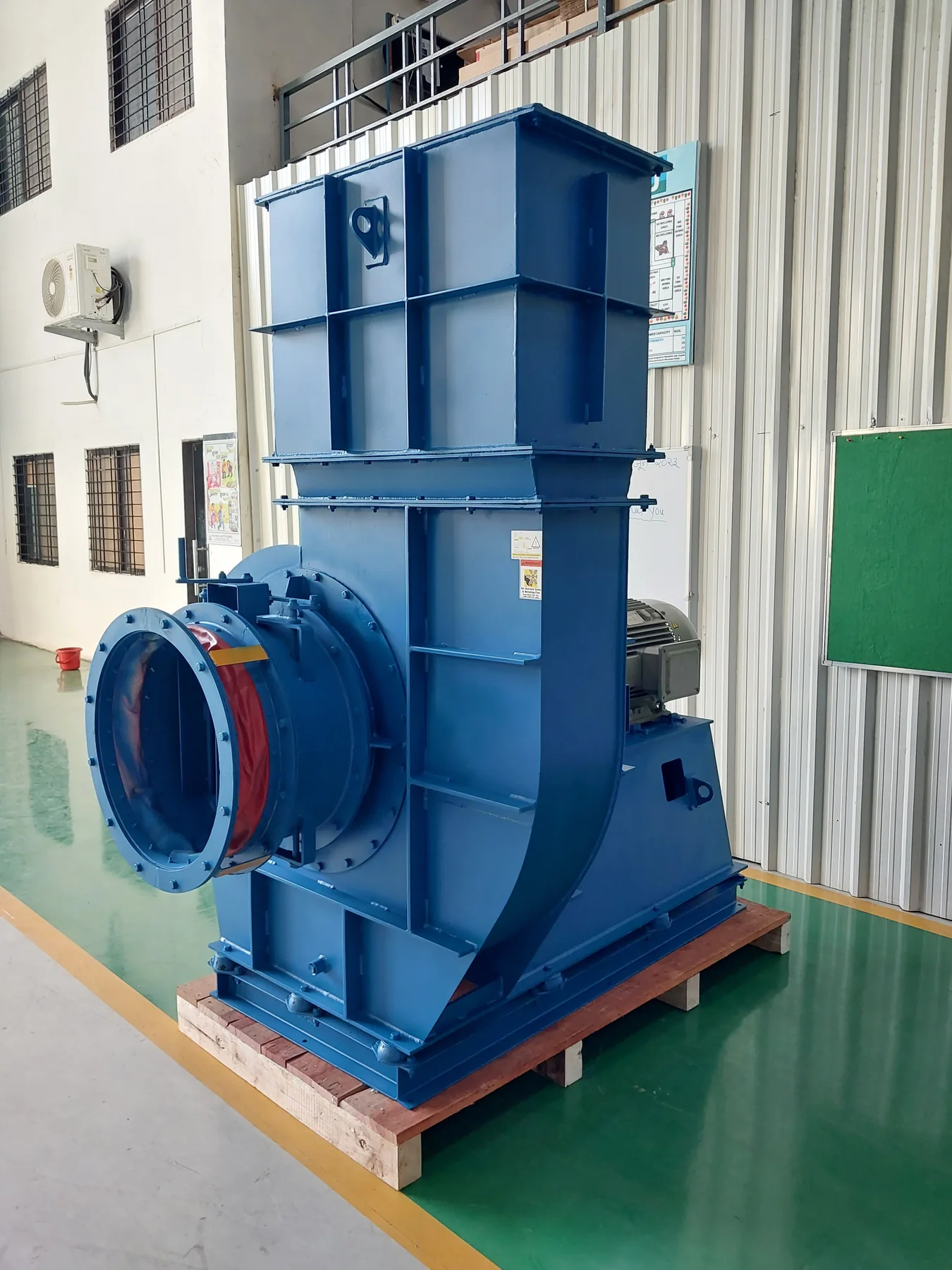
Across most of the plant, with one exception. We engineer digester and biogas boosters, odour-control and biofilter exhaust, sludge-drying and handling air, corrosive H₂S exhaust, and the general and dilution ventilation of the pump and blower houses — each engineered to its own pressure, gas and corrosion load. The deep-tank aeration blower itself, at 4,000–8,000 mmWC, is multistage or positive-displacement territory, a different machine class; every other air duty on the plant is single-stage centrifugal, and that is where we engineer. Everything else around that tank comes from one partner, on one engineering convention across the plant.
Our odour and digester air is full of H₂S. What metallurgy do you use?
We size the metallurgy to your gas analysis. Hydrogen sulphide at high humidity forms sulphuric acid on the casing wall, so on the wetted surfaces we select 316L or Corten, step to FRP, epoxy or rubber lining where the H₂S is severe, and detail casing drainage and insulation so acidic condensate cannot pool and pit the steel. Plain mild steel can pit through in a season on this duty, so the right answer depends on your H₂S concentration, moisture and temperature, and we engineer it to your gas, not a default.
The aeration blowers run continuously and drive our power bill. How do you keep them efficient?
Deep-tank aeration is a continuous high-static duty, typically 4,000 to 8,000 mmWC under 4 to 8 m of water column, running 24x7 as the plant's biggest single load. That pressure is multistage or positive-displacement territory, outside a single-stage centrifugal's envelope, so the aeration blower itself is not a machine we build — see
the duty in full. What we do build on the same plant is the digester and biogas boosters, the odour-control and biofilter exhaust, and the sludge-drying air, each sized onto its own best-efficiency region with VFD control as default rather than throttling loss, and bearings and construction rated for genuine continuous service with a long
L10 design life.
Digester biogas is flammable. How do you make the biogas booster safe?
The biogas booster and its surroundings are a classified hazardous area, so we build spark-resistant construction to AMCA 99 with non-sparking rubbing surfaces, a gas-tight welded and sealed casing to contain the methane-rich biogas, and we self-declare ATEX Zone 2/22 per 2014/34/EU (Category 3) where the area classification calls for it. We engineer the safety scope to your stated zone and gas composition, not a generic rating, and we name the boundary of that scope up front.
Can you build a replacement to match our existing blower's duty and footprint?
Yes. We reverse-engineer to the existing duty point (flow, static pressure, gas temperature, density and gas composition), bearing centres, inlet/outlet orientation and foundation bolt pattern so the unit drops onto the existing base and ducting, whether it is a biogas booster, an odour-control fan or a sludge-drying/ventilation unit. Made to your installation, not a nearest-catalogue substitute. Send the old GA, the nameplate and a curve if you have one, and we match it.
Do you performance-test the fans, and what about AMCA, CE, ATEX and quality certification?
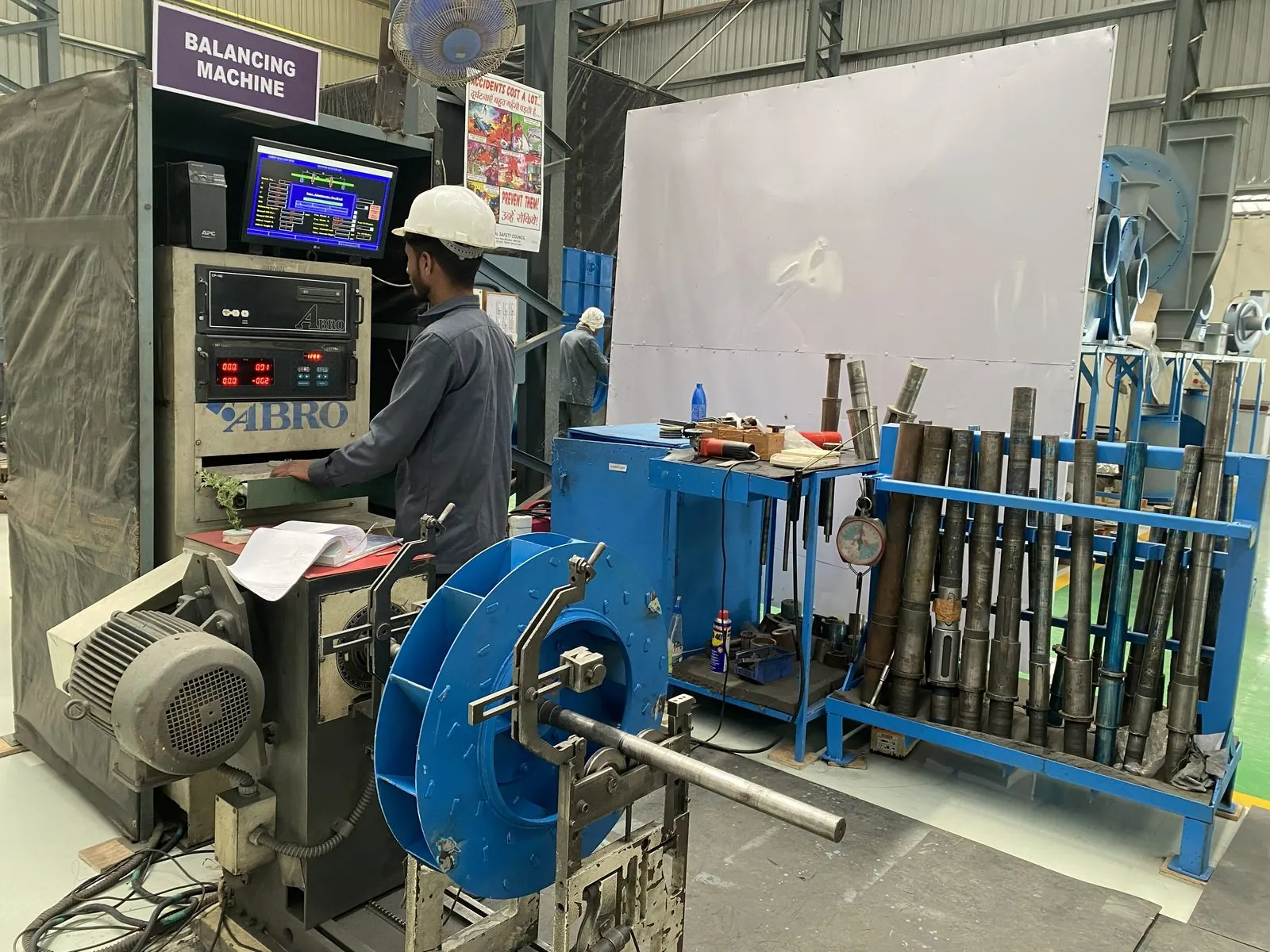
Every fan is performance-tested in-house to the IS 4894 / ISO 5801 / AMCA 210 method on our 200 HP VFD test rig, and dynamically balanced to ISO 21940 G6.3 as standard (G2.5 / G1.0 on application). Fans above the rig's 200 HP are run at derated speed and scaled to the specified duty by the fan laws. To be precise: that in-house testing is to the IS 4894 / ISO 5801 / AMCA 210 method, not AMCA-certified; CE is self-declared per 2006/42/EC and 2014/35/EU, and ATEX Zone 2/22 is self-declared per 2014/34/EU (Category 3) where the biogas area classification calls for it — those are self-declarations of conformity, not third-party certifications. Our only third-party certification is ISO 9001:2015.